Most important takeaways…
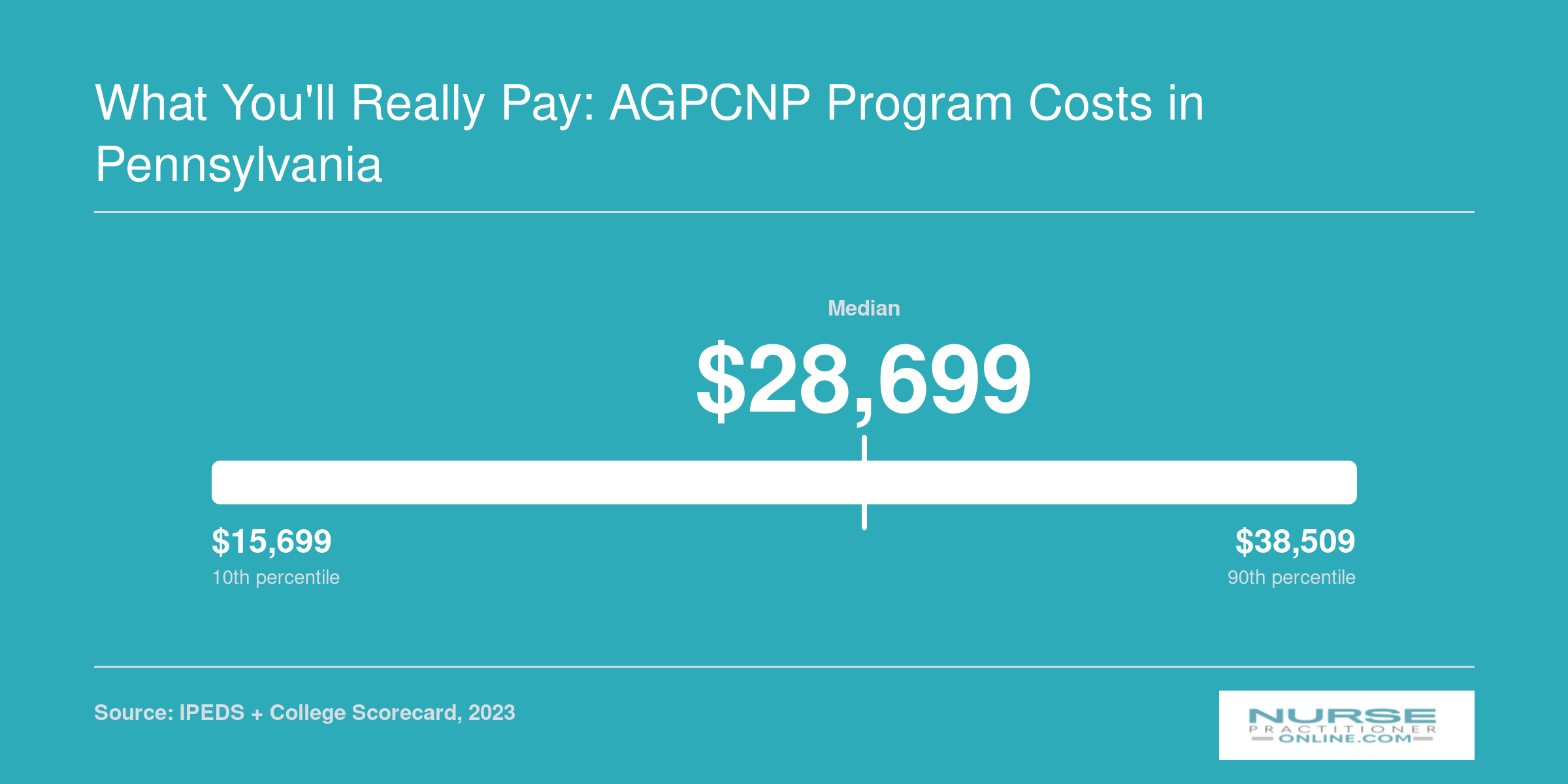
- Net prices for Pennsylvania AGPCNP programs range from roughly $15,700 to $43,800 per year, with a median near $28,700.
- Only programs accredited by CCNE or ACEN qualify graduates to sit for national NP certification exams in Pennsylvania.
- The AG-PCNP and AG-ACNP tracks lead to different certification exams, so your choice determines your long-term practice setting.
- Employer tuition benefits, HRSA scholarships, and federal loan programs can cut total out-of-pocket costs by thousands of dollars.
Northeastern Pennsylvania's population aged 65 and older is growing faster than its supply of primary care providers, and adult gerontology nurse practitioners are stepping into that gap across Lackawanna, Luzerne, and Wyoming counties. Demand is steady. Tuition is not.
Across the 15 AGPCNP programs accessible to Scranton-area RNs, net prices range from roughly $15,700 to nearly $43,800 per year, with credit-hour requirements spanning 12 to 88 depending on whether you pursue an MSN, a post-master's certificate, or a BSN-to-DNP. Format flexibility varies just as widely: some programs run fully asynchronous online, others require on-campus intensives or local clinical placements.
For working nurses, the practical question is which combination of price, schedule, and certification pathway actually fits the life you already have. Below, we break down program costs, hidden fees, clinical placement logistics, and financial aid strategies so you can make that call with confidence.
Best AGNP Programs Near Scranton, PA: Ranked by Affordability and Value
Finding an affordable adult gerontology nurse practitioner program in Pennsylvania takes more than comparing sticker prices. Below, we ranked ten AGPCNP programs accessible to Scranton-area nurses by net price, then layered in graduation rates, median graduate debt, and long-term earning potential to give you a fuller picture of value. Keep in mind that the net price figures shown are institution-wide averages and your actual cost will depend on factors like financial aid, residency status, enrollment intensity, and the specific program you choose.
- Institution-wide net price
- Median graduate debt at completion
- Graduation and retention rates
- Long-term alumni earnings
- Online accessibility for working nurses
- NCES-IPEDS federal institutional data — nces.ed.gov
- College Scorecard graduate earnings — collegescorecard.ed.gov
- Internal program database
- Independent program research

Commonwealth University of Pennsylvania
Commonwealth University of Pennsylvania, headquartered in Bloomsburg, is a public institution built from the merger of Bloomsburg, Lock Haven, and Mansfield universities. Its multi-campus system was designed to serve nurses across northeastern and central Pennsylvania, making clinical placement networks relatively close to the Scranton corridor. The school has been recognized as one of the most affordable AGNP programs in the state, with a strong commitment to keeping advanced nursing education accessible for working Pennsylvania RNs.
- CCNE accredited, 41 credit hours total
- 100% online, asynchronous coursework
- Complete full-time in two years (five semesters)
- 770 clinical hours in diverse settings
- No GRE required, rolling admissions
- Prepares for both ANCC and AANP certification
- Employer tuition reimbursement and deferment supported
Adult Gerontology Primary Care Nurse Practitioner (MSN) — Online

York College of Pennsylvania
York College of Pennsylvania offers an efficiently designed post-master's certificate for nurses who already hold an MSN and want to add the AGPCNP credential. A gap analysis determines exactly which courses you need, so you avoid paying for redundant content. The 23-credit format makes this one of the leanest pathways into adult gerontology primary care practice in the state.
- 23 total program credits after gap analysis
- 784 clinical hours required
- Online program format for flexibility
- Individualized plan of study
- Prepares for AANP and ANCC certification
- Three-semester course sequence
Adult Gerontology Primary Care Nurse Practitioner (Post-Master's Certificate) — Online

La Salle University
La Salle University in Philadelphia delivers a fully online post-master's AGPCNP certificate that requires no campus visits for didactic work. That makes it a practical, cost-effective option for Scranton-area nurses who need to avoid regular travel to Philadelphia. Admission requires an MSN, a current RN license, and at least one year of clinical experience, with a gap analysis tailoring each student's plan of study.
- CCNE accredited, fully online didactic coursework
- 14 credits for the NP track, plus gap-analysis courses
- 512 clinical hours required
- Prepares for AGPCNP national certification
- One year RN experience required for admission
- Focus on care for young adults through older adults
Adult Gerontology Primary Care Nurse Practitioner (Post-Master's Certificate) — Online

Pennsylvania State University-Penn State Harrisburg
Penn State Harrisburg's DNP in Adult Gerontology Primary Care NP is part of Penn State's statewide online nursing network, making it accessible to nurses across Pennsylvania. The hybrid format pairs mostly online coursework with just three in-person intensive sessions, minimizing time away from work. At roughly $1,027 per credit for online graduate nursing, the flat-rate tuition applies regardless of where you live in the state.
- CCNE accredited, 65 to 68 total credits
- Hybrid: online courses plus three campus intensives
- 1,125 practicum hours
- BSN-to-DNP pathway available
- Full-time (three years) or part-time (four years)
- Prepares for national NP certification
- Pennsylvania RN license required for admission
Adult Gerontology Primary Care Nurse Practitioner (DNP) — Hybrid

Neumann University
Neumann University near Philadelphia is frequently cited as one of the most affordable private schools in Pennsylvania for online NP education. Its AGPCNP programs are delivered 100% online with no required campus visits, and the school offers tuition discounts for employees of clinical partner organizations. All faculty are practicing nurse practitioners, and clinical placements span Pennsylvania, New Jersey, and Delaware.
- ACEN accredited, 45 credit hours
- Asynchronous online classes, no campus visits
- 784 clinical hours with local preceptors
- Reported 100% licensure pass rate
- Tuition discounts for partner-employer staff
- Prepares for national certification
- Financial aid and graduate assistantships available
- Online post-master's format with gap analysis
- Clinical experiences across PA, NJ, and DE
- Seven-week asynchronous course modules
- Faculty are all practicing NPs
- Prepares for ANCC or AANP certification
- Financial assistance options available
Adult Gerontology Primary Care Nurse Practitioner (MSN) — Online
Adult Gerontology Primary Care Nurse Practitioner (Post-Master's Certificate) — Online

Pennsylvania State University
Penn State's University Park campus anchors a robust AGPCNP program portfolio that includes an MSN, a DNP, and a hybrid DNP delivered through World Campus. The MSN option uses videoconferencing and online courses with clinical experiences arranged close to your home community, a genuine advantage for Scranton-area nurses. The flat per-credit tuition for online students eliminates nonresident surcharges, making cost more predictable for all Pennsylvania residents.
- CCNE accredited, two-year master's degree
- Videoconferencing and online course delivery
- Local clinical experiences near your community
- Full-time and part-time options
- Prepares for national NP certification
- No nonresident surcharge for online students
- Online hybrid DNP, roughly $1,027 per credit
- 1,125 clinical practicum hours
- Three on-campus intensive sessions required
- Full-time (three years) or part-time (four years)
- CCNE accredited
- Prepares for ANCC or AANP certification
Adult Gerontology Primary Care Nurse Practitioner (MSN) — On-Campus
Adult Gerontology Primary Care Nurse Practitioner (DNP, World Campus) — On-Campus

Temple University
Temple University's College of Public Health offers a DNP with an Adult Gerontology Primary Care concentration that emphasizes urban health and evidence-based practice. The hybrid format combines synchronous online evening classes with in-person clinical experiences, and clinical networks are concentrated in eastern Pennsylvania, making logistics somewhat more manageable for Scranton-area students than western-PA programs. Graduates are eligible for both ANCC and AANP certification.
- CCNE accredited, 68 total credit hours
- Hybrid: synchronous online evenings plus clinicals
- Full-time (three years) or part-time (four years)
- 1,000 clinical hours with capstone project
- Post-BSN and post-master's entry pathways
- Prepares for ANCC and AANP certification
- Urban health focus with diverse clinical sites
Adult Gerontology Primary Care Nurse Practitioner (DNP) — Hybrid

Thomas Jefferson University
Thomas Jefferson University in Philadelphia offers AGPCNP pathways at the master's, post-graduate certificate, and BSN-to-DNP levels, all in a hybrid format that blends online coursework with campus sessions at its Center City and Dixon (Abington) locations. Jefferson's location in eastern Pennsylvania reduces travel time for Scranton-area nurses compared with western-PA alternatives, and its gap analysis for the certificate track can meaningfully lower total credits and cost.
- 45 total credit hours, hybrid format
- Complete in two to five years
- Prepares for ANCC or AANPCB certification
- Center City and Dixon campus options
- Careers in primary care and specialty settings
- Full-time and part-time scheduling
- 18 credit hours, hybrid online format
- Gap analysis may reduce required coursework
- Prepares for ANCC and AANPCB exams
- Outpatient, wellness, and chronic care focus
- Culturally responsive, evidence-based curriculum
- For master's or doctoral-prepared nurses
- Hybrid online and campus format
- Four to six year completion timeline
- Leads to DNP and national certification
- Leadership and evidence-based practice focus
- Requires BSN for admission
- Advanced practice nursing preparation
Adult Gerontology Primary Care Nurse Practitioner (MSN) — Hybrid
Adult Gerontology Primary Care Nurse Practitioner (Post-Graduate Certificate) — Hybrid
Adult Gerontology Primary Care Nurse Practitioner (BSN-to-DNP) — Hybrid

University of Pittsburgh-Pittsburgh
The University of Pittsburgh's School of Nursing offers AGPCNP education through campus, online, and distance-hybrid DNP formats, with a strong emphasis on chronic conditions, multimorbidity, and internal medicine. While its clinical networks lean toward western and central Pennsylvania, the distance education option lets Scranton-area nurses take many didactic courses virtually. Pitt's 85.5% graduation rate and relatively modest median graduate debt add to its long-term value proposition.
- 88 total credit hours, onsite in Pittsburgh
- 71 didactic and 17 clinical credits
- DNP Scholarly Project required
- Full-time and part-time options
- Prepares for ANCC or AANPCB certification
- Emphasis on chronic conditions and multimorbidity
- 41 total credit hours for MSN-prepared NPs
- Synchronous online courses available
- Full-time and part-time options
- Capstone project required
- Covers adolescent through older adult health
- Online and onsite options
- Distance education format, attend class virtually
- Interact live with on-campus classmates
- Focus on primary care for adults
- Evidence-based practice coursework
- Designed for nurses in underserved regions
- Three concentration options available
Adult Gerontology Primary Care Nurse Practitioner (BSN-to-DNP, Campus) — On-Campus
Adult Gerontology Primary Care Nurse Practitioner (Post-MSN DNP, Online) — On-Campus
Adult Gerontology Primary Care Nurse Practitioner (DNP, Distance/Hybrid) — On-Campus

University of Pennsylvania
The University of Pennsylvania's School of Nursing is consistently ranked among the nation's top nursing programs. Its campus-based MSN in Adult Gerontology Primary Care NP offers a rigorous 12-course-unit curriculum with clinical preceptorships across community health clinics, VA facilities, and long-term care settings in the Philadelphia region. With a 96.5% graduation rate and the highest median alumni earnings of any school on this list, Penn delivers exceptional outcomes, though its sticker price and in-person requirements make it better suited for nurses who can relocate or commute to Philadelphia.
- 12 course units, campus-based in Philadelphia
- Full-time and part-time study options
- Clinical preceptorships across diverse settings
- Advanced physiology, pharmacology, and assessment
- Prepares for care transitions management
- Starts in summer, fall, or spring
- Focus on acute and chronic condition management
Adult Gerontology Primary Care Nurse Practitioner (MSN) — On-Campus
How We Ranked These Adult Gerontology NP Programs
Affordability and Financial Aid Come First
Our ranking prioritizes what matters most to working nurses: keeping your education affordable while preserving quality. We assigned the heaviest weight to each program's net price (the average out-of-pocket cost after federal, state, and institutional aid) and the percentage of students receiving grants or scholarships. Programs that deliver strong financial aid packages rise to the top, because a lower sticker price means little if most students pay full freight.
Program-Level Outcomes, Not Just Marketing
We supplement cost metrics with program-specific debt loads at graduation, median earnings one and two years after completion, and graduation rates. These data points come directly from federal College Scorecard program-level files, not from university marketing materials. When a school reports that AGNP graduates carry $28,000 in median debt and earn $95,000 two years out, those figures reflect real student experiences, not projections.
One caveat: graduation rates are institution-wide averages, not program-specific. Similarly, net price is calculated for the broader student body in the same credential level (graduate, in this case). We note these limitations transparently because trustworthy advice depends on clear data boundaries.
Accreditation and Geography Filters
Only programs holding CCNE or ACEN accreditation and offering a recognized Adult Gerontology Primary Care Nurse Practitioner (AG-PCNP) concentration made the list. We included fully online programs available to Pennsylvania residents and campus-based options within commuting distance of Scranton. Programs without clear AG-PCNP pathways or that restrict Pennsylvania enrollment were excluded, even if they appeared affordable on paper. If you are exploring options beyond Pennsylvania, our guide to the best online MSN adult gerontology nurse practitioner programs covers nationally available choices ranked with the same methodology.
What Sets This Ranking Apart
Most listicles rely on published tuition and superficial reputation scores. We dig deeper: actual program-level debt, real post-graduation earnings, and financial aid penetration rates. If a program boasts low tuition but leaves graduates with high debt or weak employment outcomes, our method surfaces that gap. You deserve a complete financial picture before you commit two years and tens of thousands of dollars to any AGNP program.
What You'll Really Pay: AGPCNP Program Costs in Pennsylvania
Net prices across the 15 adult gerontology NP programs we reviewed range widely, from roughly $15,700 to nearly $43,800 per year. The median sits around $28,700, so most students land somewhere in between. Keep in mind that these figures reflect institutional net price after grants and scholarships. On top of tuition, you should budget for clinical travel expenses, background checks, drug screenings, and certification exam fees (typically $315 to $395), all of which can add $1,000 or more to your total investment. Median federal debt at graduation across these programs falls between about $15,700 and $27,000, reinforcing the importance of comparing the full cost picture before you commit.
Beyond Tuition: Hidden Costs Every AGNP Student Should Budget For
Sticker-price tuition rarely tells the full story of what an AG-PCNP student actually pays. Many graduate nursing programs publish per-credit rates but leave out fees that quickly add up, especially for working nurses who commute to clinical sites across northeastern Pennsylvania. Budgeting realistically means planning for at least $2,000 to over $5,000 in out-of-pocket costs beyond the published tuition, depending on your clinical placement locations and program structure.
Clinical Placement Travel and Site-Related Fees
Even in an online program, clinical rotations happen in person, and in the Scranton area, that can mean driving to Wilkes-Barre, rural primary care offices, or even into the Lehigh Valley. Gas, parking, and occasional lodging for multi-day intensives can easily run $500 to $1,500 over the course of the program. Some schools charge a clinical course fee every semester you enroll in a practicum. For instance, Walden University's AGPCNP post-master's certificate includes a $160 clinical course fee per course, totaling $640 across the program.1 While not advertised as part of tuition, these fees are mandatory.
Liability Insurance, Background Checks, and Drug Screenings
Before you ever see a patient, most programs require professional liability insurance (often $50 to $150 per year) plus a one-time background check and drug screening that together cost $150 to $300. These protect both you and the clinical site. Some programs also charge a matriculation or enrollment fee, like the $140 matriculation fee at the University of Colorado's AG-PCNP program, which can be a surprise if you only read the per-credit price.2
Technology, Books, and Simulation Lab Fees
Online learning platforms, e-portfolio software, and mandatory clinical skills resources are common extras. Walden charges a $299 clinical skills resource fee and program fees of $185 per quarter, totaling $1,110 across the program.1 Textbooks and supplies typically range from $1,800 to $2,500. At the University of Colorado, books and supplies are estimated at $2,000 total.2 Some programs also levy a technology fee per semester; for example, $349 per term at Colorado. Even if you opt out of the school's health insurance (which can cost thousands), you will need to budget for these unavoidable academic costs.
Certification Exam and Licensure Fees
After graduation, you will need to pass the ANCC or AANP certification exam. The exam fee alone is typically $300 to $400, and you may also pay for a state NP license application, about $100 to $200 in Pennsylvania. Some graduates also invest in review courses, which add several hundred dollars more.
How Hidden Costs Influence Borrowing
These out-of-pocket expenses help explain why reported median debt for NP graduates often surpasses the simple sum of published tuition. When comparing programs, look beyond the listed price to the total estimated cost of attendance, which schools are required to provide. Browsing best online nurse practitioner programs can help you compare fee schedules side by side. A program with a lower per-credit rate might actually cost more once you factor in fees. By anticipating these hidden line items, you can choose an affordable AGNP program near Scranton that won't strain your finances unexpectedly.
Online, Hybrid, or Campus: Which AGNP Format Fits Your Schedule?
Most adult gerontology nurse practitioner programs near Scranton, PA deliver coursework online or in a hybrid format, but virtually all require in-person clinical hours regardless of how you complete your didactic work. For working nurses in northeastern Pennsylvania, this means you can tap into accredited AGNP programs across the state and beyond, while still completing clinical rotations closer to home. Understanding the trade-offs of each format helps you choose the path that fits your schedule, budget, and learning style.
Pros
- Online programs offer maximum scheduling flexibility, letting you complete lectures and assignments around 12-hour shifts.
- Enrolling in an online AGNP program expands your choices well beyond the Scranton area without relocating.
- Hybrid formats blend virtual coursework with occasional campus intensives, providing structured peer networking and faculty interaction.
- On-campus cohorts often include built-in clinical placement coordination, reducing the burden of securing your own preceptor sites.
- Hybrid and campus students typically build stronger local professional networks that can lead to job referrals after graduation.
Cons
- Online students usually bear more responsibility for arranging their own clinical preceptors in the Scranton or Wilkes-Barre area.
- Fully online programs may carry technology fees or out-of-state tuition surcharges that offset apparent savings.
- On-campus formats require a fixed commute schedule, which can conflict with rotating hospital shifts.
- Hybrid programs still involve periodic travel to a home campus, adding lodging and transportation costs if the school is hours from Scranton.
- Regardless of didactic format, all students must complete several hundred in-person clinical hours, so no program is entirely remote.
Clinical Placement Support in Northeastern Pennsylvania
Securing high-quality clinical placements is one of the most underestimated challenges AGNP students face. While tuition and textbooks command attention early on, the work of finding preceptors and navigating site agreements often catches working nurses off guard.1 In Northeastern Pennsylvania, prospective students have both advantages (a robust network of aging-care providers) and hurdles (limited program-managed placement support from some schools).
Major Healthcare Systems Accepting AGNP Students
Scranton and the surrounding Lackawanna and Luzerne counties host several large health systems that welcome nurse practitioner students for clinical rotations:
- Commonwealth Health: This Scranton/Wilkes-Barre system (now part of the Risant Health/Kaiser network) participates in the Northeast Pennsylvania Clinical Education Consortium (NEPCEC), which coordinates the majority of teaching rotations across its facilities.2
- The Wright Center: Recognized as the largest Teaching Health Center in the nation, The Wright Center in Scranton offers primary care rotations that align well with AG-PCNP clinical hour requirements.2
- Geisinger: With multiple campuses in the region, Geisinger accepts students for family medicine, internal medicine, and geriatric rotations, all of which count toward your primary care hours.
- Scranton Primary Health Care Center: This community health center provides rotations in family medicine, internal medicine, pediatrics, and psychiatry, making it a strong fit for students seeking diverse primary care exposure.2
- Allied Services Healthcare System: If you're interested in elective experiences, Allied Services offers rotations in rehabilitation and post-acute settings throughout the Scranton/Wilkes-Barre area.2
Who Arranges Your Clinicals?
Not all AGNP programs provide equal placement support. Some schools, like Wilkes University's AGPCNP program, offer complimentary clinical placement services that handle site vetting, affiliation agreements, and preceptor matching.3 Other programs place the burden entirely on you, requiring you to cold-call offices, negotiate unpaid preceptor agreements, and shepherd paperwork between the school and the clinical site. This hidden workload can add months to your timeline and significant stress during semesters when you're juggling coursework and shifts. If you are still weighing your options, understanding how to enroll in NP school online can help you evaluate which programs offer the strongest clinical support before you commit.
Primary Care Sites and Scranton's Aging Population
Because AG-PCNP certification requires primary care clinical hours, you'll complete rotations in family practice, internal medicine, and geriatric offices. Scranton's older demographic works in your favor: geriatric clinics and primary care practices serving Medicare populations are relatively accessible, and many providers understand the scope of adult-gerontology training. If you're targeting a MinuteClinic or retail health rotation, note that CVS Health requires students to be enrolled in an FNP program with an executed preceptor agreement and accepts applications only during three annual windows (August 1 through 14, December 1 through 14, and April 1 through 14).4
Ask Before You Enroll
Before you commit to any program, ask admissions representatives:
- Does the school arrange clinical placements, or am I responsible for finding my own preceptors?
- Does the program hold active affiliation agreements with Commonwealth Health, The Wright Center, Geisinger, or other Scranton-area systems?
- What is the average time students spend securing placements each semester?
- Are there caps on how many students can rotate at a given site?
Programs with established clinical partnerships in Northeastern Pennsylvania will save you time, reduce administrative friction, and let you focus on learning rather than logistics.
Questions to Ask Yourself
Graduate Outcomes: Earnings and ROI After Your AGNP Degree
When you earn an adult gerontology primary care nurse practitioner credential, you're not just adding initials to your résumé. You're investing time, tuition, and often debt in a career move that should deliver measurable financial returns. Understanding what graduates actually earn after completing AGNP programs near Scranton, and how those earnings compare to the debt they take on, helps you evaluate which program offers the strongest return on investment.
What AGNP Graduates Earn in Pennsylvania
According to the Bureau of Labor Statistics, nurse practitioners in Pennsylvania earn a median annual wage of $121,610, with the bottom 10 percent starting around $87,340 and top earners reaching $165,240 or higher.1 These figures reflect the broad range of NP specialties and settings across the state, from primary care clinics to acute care hospitals. While program-level earnings data at one and four years post-completion are not yet available for most AGNP programs in the Scranton region, the occupational outlook provides a useful benchmark for what you can expect once you're practicing.
Pennsylvania's wage profile for nurse practitioners mirrors national medians, suggesting that the local market offers competitive compensation without the premium you might see in higher-cost urban centers. For working nurses in northeastern Pennsylvania, this means an AGNP credential can open the door to six-figure salaries while preserving the lower cost of living that makes the region attractive.
Debt-to-Earnings Ratios and ROI Across Top Programs
Return on investment depends on two variables: what you pay and what you earn. Among the programs ranked earlier, median debt at completion ranges from around $15,000 to $26,000. University of Pennsylvania graduates carry a median debt load of approximately $15,715 yet command some of the highest early-career earnings, yielding an ROI ratio above 7. Thomas Jefferson University, with median debt near $14,744 and tuition for its post-master's certificate at $24,528, delivers an ROI ratio above 5. Both programs demonstrate that manageable debt paired with strong earning potential creates a fast payback period.
At the other end of the spectrum, Wilkes University in Wilkes-Barre charges $26,088 for its online MSN NP programs and graduates carry median debt around $26,000. With an ROI ratio near 2.4, you'll still see positive returns, but the payback horizon is longer. Pennsylvania State University and Temple University fall in the middle, with ROI ratios between 2.5 and 2.6, reflecting moderate tuition and solid, if not exceptional, graduate earnings.
Local Employment Outlook and Demand Drivers
Demand for nurse practitioners in Pennsylvania is projected to grow faster than average over the next decade, driven by physician shortages in rural and underserved communities and an aging population that requires chronic disease management and preventive care. The Scranton-Wilkes-Barre metro area, with its significant proportion of older adults, is particularly well positioned to benefit from this trend. Primary care AGNP graduates will find opportunities in community health centers, geriatric clinics, assisted living facilities, and private practices that serve Medicare and dual-eligible populations.
This regional context matters because sustained demand translates to job security, bargaining power, and the ability to negotiate competitive salaries even in smaller markets. If you're planning to stay in northeastern Pennsylvania after graduation, your AGNP credential will position you to meet a pressing local need while earning wages that compare favorably to both state and national medians.
NP Earnings Snapshot: Scranton-Wilkes-Barre Metro
Primary Care vs. Acute Care: Understanding AG-PCNP and AG-ACNP Tracks
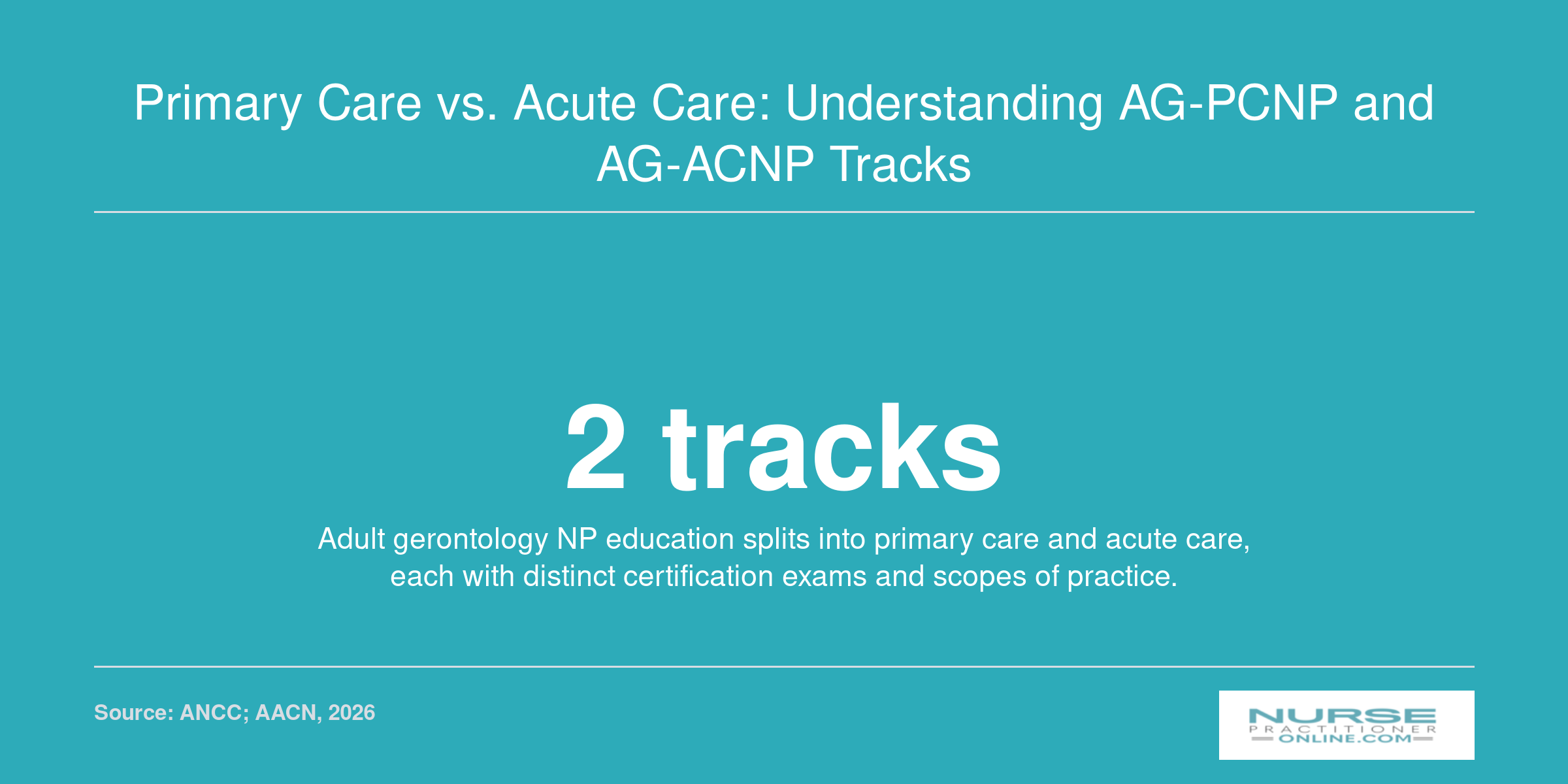
Choosing between the adult gerontology primary care (AG-PCNP) and acute care (AG-ACNP) tracks is one of the most consequential decisions you will make as an AGNP student, because each track locks you into a specific certification exam and, by extension, a specific scope of practice. Most of the affordable programs ranked near Scranton are AG-PCNP programs, which prepare you for outpatient, longitudinal primary care with adults and older adults. If your goal is to work in ICUs, emergency departments, or hospital inpatient units managing acute and critical conditions, you would need an AG-ACNP program instead. The AG-PCNP track leads to the ANCC AGPCNP-BC credential, while the AG-ACNP track qualifies you for either the ANCC AGACNP-BC or the AACN ACNPC-AG credential. Both tracks require a minimum of 500 clinical hours, but the settings differ sharply: primary care practices, community health centers, and long-term care facilities for AG-PCNP students versus hospitals, critical care units, and emergency departments for AG-ACNP students. Confirming the right track before you enroll protects your certification eligibility and ensures your clinical training aligns with the job you actually want.
Accreditation and Certification Exam Eligibility
Choosing a program with the right accreditation is not just a nice-to-have. It is the single most important checkbox on your list, because without it you cannot sit for a national certification exam or obtain your Pennsylvania NP license.
Why Accreditation Is Non-Negotiable
Two bodies accredit graduate nursing programs in the United States: the Commission on Collegiate Nursing Education (CCNE) and the Accreditation Commission for Education in Nursing (ACEN). Both the American Nurses Credentialing Center (ANCC) and the American Association of Nurse Practitioners Certification Board (AANP) require candidates to graduate from a program holding one of these accreditations. If your program lacks CCNE or ACEN approval, you simply will not be eligible to take the certification exam, regardless of your grades or clinical hours. For a deeper dive into the differences between these two accrediting bodies, see our nursing accreditation guide on ACEN vs CCNE.
Accreditation Status of Nearby Programs
Among the schools most relevant to nurses in the Scranton area, Penn State's Primary Care Adult-Gerontology Nurse Practitioner program holds CCNE accreditation.1 The University of Scranton's graduate nursing programs are also CCNE-accredited, though it is worth noting that Scranton does not currently offer an AG-PCNP track; its MSN concentrations focus on Family NP, Adult-Gerontology Clinical Nurse Specialist, and Nurse Anesthesia.2 For other Pennsylvania schools that appear in AGNP program searches, such as Drexel, Thomas Jefferson, or the University of Pittsburgh, you should verify current accreditation status directly through the CCNE or ACEN online directories before applying. Accreditation status can change, and confirming it yourself takes only a few minutes.
Two Paths to Certification
Once you graduate from an accredited AG-PCNP program, you have two certification options:
- ANCC Adult-Gerontology Primary Care NP: A computer-based exam covering primary care management of adolescents through older adults, including health promotion and chronic disease management.
- AANP Adult-Gerontology Primary Care NP: A similar scope exam with a slightly different question format and blueprint.
Both credentials are accepted by the Pennsylvania State Board of Nursing for NP licensure, so the choice comes down to personal preference, employer expectations, and exam style. Many candidates review sample questions from both boards before deciding. If you are also considering a doctoral pathway, you may want to explore DNP AGNP programs that build on the same certification eligibility.
A Caution About New or Unaccredited Programs
Programs that are newly launched or hold only "candidacy" status (meaning they have applied for accreditation but have not yet received full approval) can create real delays. Graduates of candidacy-status programs may need to wait until full accreditation is granted before they are eligible to register for ANCC or AANP exams. That waiting period is unpredictable and could stretch months beyond your graduation date, leaving you unable to practice as an NP. Before you enroll, ask the program directly: "Are your current graduates eligible to sit for national certification immediately upon completing the program?" If the answer is anything other than a clear yes, proceed with caution and keep looking.
Related Articles
Financial Aid and Cost-Saving Strategies for AGNP Students
Federal student aid has become the financial backbone for most graduate nursing students, but a growing roster of specialty scholarships and employer partnerships can significantly reduce your out-of-pocket burden. Understanding the full landscape of financial resources available in 2026, especially options tied to Pennsylvania and northeastern PA's healthcare workforce needs, can save you tens of thousands of dollars over the course of your AGNP program.
Federal Aid: The Starting Point
Start by filing the Free Application for Federal Student Aid (FAFSA) each year you're enrolled. Graduate students do not qualify for Pell Grants, but you remain eligible for federal Direct Unsubsidized Stafford Loans (up to $20,500 annually) and Grad PLUS loans, which cover the full cost of attendance minus other aid received. Grad PLUS loans require a credit check but offer fixed interest rates and income-driven repayment options after graduation. Treating the FAFSA as non-negotiable is the simplest way to unlock baseline funding.
HRSA Nurse Corps: High-Value Scholarships and Loan Repayment
The Health Resources and Services Administration Nurse Corps Scholarship covers full tuition and eligible required fees, plus a monthly stipend of approximately $1,400 to $1,500, for students enrolled in accredited APRN programs.1 In exchange, you commit to two years of full-time employment at an approved Critical Shortage Facility. Northeastern Pennsylvania includes multiple designated Health Professional Shortage Areas, making Nurse Corps particularly relevant if you're open to serving underserved communities after graduation. U.S. citizens, nationals, and lawful permanent residents are eligible. If you're already carrying student debt, the Nurse Corps Loan Repayment Program offers up to 85 percent forgiveness over three years of qualifying service.
Pennsylvania-Specific Scholarships and Employer Support
The Pennsylvania State Grant Program does not extend to graduate students, but several nursing-focused scholarships do:2
- Nursing Foundation of Pennsylvania General Scholarship: Awards $1,000 annually to full-time MSN, DNP, or PhD students enrolled in accredited Pennsylvania nursing programs; applications close March 31 each year.3
- Evelyn Benson Nurse Leadership Scholarship: For full-time MSN or doctoral students in their third or fourth year (or equivalent), with a minimum 3.0 GPA and demonstrated financial need and leadership.3
- Nightingale Awards of Pennsylvania: Offers $1,000 to $4,000 to Pennsylvania residents enrolled in State Board-approved programs, including MSN NP tracks; applications typically open in early spring with an April deadline.
- Independence Blue Cross Foundation Nursing Scholarships: Primarily serving southeastern Pennsylvania, this foundation has awarded more than $17 million to over 7,200 nursing students at undergraduate, graduate, and doctoral levels.4
Local hospital systems also invest in their workforce. Geisinger and Commonwealth Health both offer tuition reimbursement or assistance programs for employees pursuing advanced practice degrees. Benefits vary by employment status and department, so negotiate your terms before you enroll. Some programs require a post-graduation service commitment, while others offer upfront tuition support.
Practical Cost-Saving Tactics
Beyond scholarships, three strategies can meaningfully trim total program cost:
- Accelerate your timeline: Every semester you shave off reduces not only tuition but also foregone income and living expenses. Full-time enrollment, when feasible, often yields lower per-credit rates than part-time plans.
- Compare per-credit pricing: Some schools charge a flat full-time rate; others bill per credit. If you can manage 9 or 12 credits per term, confirm which billing model saves you money.
- Secure employer tuition assistance early: Approach your manager or HR team before submitting applications. Written agreements clarify expectations, protect your investment, and sometimes unlock additional internal scholarships or preferred partnerships with specific universities.
Frequently Asked Questions About AGNP Programs Near Scranton
Choosing the right adult gerontology nurse practitioner program is a big decision, especially when you are balancing work and family near Scranton, PA. Below are answers to the questions nurses ask most often when exploring AGNP options in Pennsylvania.
- How much does an AGNP program cost in Pennsylvania?
- Total tuition for an AG-PCNP MSN program in Pennsylvania typically ranges from roughly $30,000 to $70,000 or more, depending on the school and format. Programs require between 45 and 47 credits on average. Online programs from out-of-state universities sometimes offer competitive per-credit rates, so it pays to compare total cost of attendance, including fees, clinical placement expenses, and technology charges, before committing.
- Are there fully online AGNP programs accredited in Pennsylvania?
- Yes. Several nationally accredited universities offer fully online AG-PCNP coursework available to Pennsylvania residents. Schools such as Spring Arbor University, Chamberlain University, and Adelphi University deliver didactic content entirely online. Clinical hours (typically around 500) must still be completed in person at approved sites, but students near Scranton can often arrange local preceptorships. Always confirm the program holds CCNE or ACEN accreditation before enrolling.
- How long does it take to complete an adult gerontology nurse practitioner program part-time?
- Most part-time AG-PCNP MSN programs take about three years, or roughly six to eight semesters. Adelphi University's online MS program, for example, lists a three-year part-time timeline. Full-time students may finish in as few as 29 months at some schools. Post-master's certificate tracks for nurses who already hold an MSN can be completed in one to two years, offering a faster path to AG-PCNP certification.
- What is the difference between AG-PCNP and AG-ACNP programs?
- AG-PCNP (Adult Gerontology Primary Care Nurse Practitioner) programs prepare you to manage chronic conditions, preventive care, and wellness across the adult lifespan in outpatient settings. AG-ACNP (Adult Gerontology Acute Care Nurse Practitioner) programs focus on episodic, complex, and critical care in hospitals and emergency departments. Each track leads to a different certification exam, and your choice should align with the clinical setting where you plan to practice.
- What certification exams can AGPCNP graduates take?
- Graduates of an accredited AG-PCNP program are eligible to sit for either the ANCC Adult Gerontology Primary Care NP board certification (AGPCNP-BC) or the AANP Adult Gerontology NP certification (A-GNP). Pennsylvania requires passing one of these national exams to obtain your Certified Registered Nurse Practitioner (CRNP) license. Programs such as Spring Arbor University's MSN specifically prepare students for both the ANCC and AANP exams.
- Can I transfer credits from another MSN program into an AGNP program?
- Most Pennsylvania nursing schools accept a limited number of transfer credits, typically six to nine graduate-level credits. To qualify, courses generally must have been completed within the past five years with a minimum grade of B. Clinical hours, however, are almost never transferable. Contact the program's admissions office early to submit transcripts for evaluation, because transfer policies vary and accepted credits can reduce both tuition costs and time to graduation.
Pennsylvania by City
- ACNP Programs in Pennsylvania
- Allentown, Pennsylvania (FNP)
- DNP NP Programs in Pennsylvania
- FNP Programs in Pennsylvania
- Philadelphia, Pennsylvania (ACNP)
- Philadelphia, Pennsylvania (PNP)
- Philadelphia, Pennsylvania (WHNP)
- Pittsburgh, Pennsylvania (AGNP)
- Pittsburgh, Pennsylvania (CCNP)
- Pittsburgh, Pennsylvania (PMHNP)
- PMHNP Programs in Pennsylvania
- PNP Programs in Pennsylvania