Advancing from RN to nurse practitioner requires navigating accreditation requirements, clinical hour mandates, and state-specific licensure rules that vary more than most working nurses expect. This page explains how nursepractitioneronline.com produces, reviews, and maintains the content it publishes for nurses weighing NP education and career decisions.
Our Review Process
How the team behind nursepractitioneronline.com evaluates and maintains the accuracy of every article.

How Are Articles Reviewed?
Every article published on nursepractitioneronline.com moves through three sequential stages before it reaches readers. Each stage serves a distinct purpose, and no article goes live until all three are complete.
Drafting and Subject-Matter Review
The process begins with a clinically informed writer or contributing reviewer who holds relevant credentials in advanced practice nursing or a closely related field. At this stage, the goal is substantive accuracy: are the clinical claims correct, are the program descriptions grounded in reality, and does the article reflect how advanced practice nursing actually works rather than how it might be idealized? Subject-matter reviewers operate independently from the staff who manage the publication calendar, which means their assessments are not shaped by scheduling pressures or production timelines.
Editorial Review for Accuracy and Clarity
Once the subject-matter review is complete, the Editorial Team takes over to assess the article for clarity, internal consistency, and appropriate sourcing. This stage is less about clinical nuance and more about whether a working nurse reading during a lunch break can follow the logic, trust the structure, and act on the information.
Fact-Checking Before Publication
The final stage is a dedicated fact-check. Cited statistics are traced back to their original sources, such as federal databases maintained by bodies like the Bureau of Labor Statistics or the National Center for Education Statistics. Any school or program mentioned is confirmed to still exist and to hold current accreditation from the appropriate regional or programmatic accreditor. Regulatory claims, including scope-of-practice statements and licensure requirements, are cross-checked against the most recent state board guidance or national standards. Only after this verification step is the article cleared for publication.
Who Qualifies to Review Content?
Reviewers hold graduate-level credentials in nursing, nurse practitioner practice, or health-education fields. This requirement exists because nurse practitioner education content directly influences career trajectories and licensure eligibility, so nursepractitioneronline.com treats reviewer vetting with the same seriousness one would apply to patient-safety protocols. Beyond holding appropriate degrees, reviewers must demonstrate direct clinical or academic experience in NP education, enabling them to evaluate material from a practitioner's perspective rather than solely as editors or writers.
For content addressing accreditation or regulatory matters, reviewers are expected to have working familiarity with bodies such as the Commission on Collegiate Nursing Education, the Accreditation Commission for Education in Nursing, and the American Association of Colleges of Nursing.12 These organizations set the standards that shape NP program quality and graduate eligibility for certification, so reviewers covering these topics must understand how accreditation decisions affect prospective students.
Reviewer qualifications are assessed before engagement through credential verification. Self-reported credentials alone do not satisfy the site's requirements. This step adds time to the editorial process, but the stakes warrant it: nurses making decisions about advanced education deserve guidance shaped by verified expertise, not assumptions about a reviewer's background.
Where Does the Data Come From?
Every workforce or program claim involves a tradeoff between depth and timeliness, and our sourcing hierarchy reflects that. We start with primary federal and professional sources, then move outward only when those sources do not cover the question.
For workforce data, including wages and employment projections for nurse practitioners and related roles, we cite the Bureau of Labor Statistics directly. For institutional and program-level information, including enrollment, completion, and tuition, we draw from IPEDS / NCES. When the topic involves nursing program accreditation, we reference the accrediting bodies themselves, the Commission on Collegiate Nursing Education and the Accreditation Commission for Education in Nursing, rather than third-party compilations that may lag behind status changes.
Secondary sources, including industry reports and news coverage, are used when they add context that primary data cannot supply, and we cross-check them against the underlying federal or professional source where possible. Salary, employment-projection, and tuition figures are attributed with the dataset year so readers can judge for themselves how current the number is by the time they read it.
How Is Information Kept Current?
Information on nursepractitioneronline.com is reviewed on an ongoing basis, not left static after publication. When underlying data sources release new figures, such as the annual Bureau of Labor Statistics Occupational Outlook updates or new IPEDS data from the National Center for Education Statistics, the Editorial Team flags the affected articles for timely review. Updates that involve changes to regulatory standards, accreditation requirements, or scope-of-practice laws also prompt immediate attention. In most cases, edits are applied directly to the existing article without a separate correction notice, unless the change is material enough to warrant a note for readers. This approach keeps content aligned with the latest evidence while minimizing disruption for busy nurses.
How Can Readers Report Errors or Request Corrections?
Anyone reading an article on nursepractitioneronline.com who spots a factual error, an outdated statistic, or a claim that no longer reflects current guidance is encouraged to reach out directly. The contact mechanism is kept general by design: readers can get in touch through the site's standard contact channel, and every report receives genuine attention rather than an automated response.
When a concern is submitted, the Editorial Team reviews the flagged content against the original source material. If the reported issue is confirmed, the correction is made promptly. For changes that affect the substance of the article, a brief note is added to acknowledge what was updated and why. Minor typographical fixes are corrected quietly, without ceremony.
This feedback loop matters more in NP education and credentialing than in many other fields, because program requirements, accreditation standards, and licensure rules shift with some regularity. A reader who recently completed an FNP program may have firsthand knowledge that a detail in an article has changed. That kind of practical, on-the-ground input is genuinely useful and is treated as a valued part of keeping content accurate and trustworthy over time.
Nurse Practitioner Contributors

Rebecca Brunelle
Rebecca Brunelle is a pediatric nurse practitioner with experience in pediatric critical care and pediatric cardiology. She is currently living in Buenos Aires, Argentina. Since moving abroad in 2016, she has expressed her passion for nursing by writing blog posts and working in nursing curriculum development.
Latest posts by Rebecca Brunelle (see all)
Kelly Coloff, FNP
Kelly Coloff, FNP, has been an RN since 2002 and practiced as a Nurse Practitioner in primary care, urgent care, and dermatology since 2008. Kelly became a freelance medical writer in 2016 and owns Pulse Medical Writing, LLC. As a writer, her focus is clinical healthcare application, but she also enjoys creative writing. Kelly also enjoys reading and spending time outdoors with her family.
Latest posts by Kelly Coloff, FNP (see all)

Judy Daniels, MSN, RN, AGPCNP-BC
Judy Daniels, MSN, RN, AGPCNP-BC has spent over 15 years working as an Adult-Gerontology Primary Care Nurse Practitioner in the greater Portland, Oregon area. More recently, she has turned her attention to nursing education and writing. Judy and her husband have 2 children and 2 dogs.
Latest posts by Judy Daniels, MSN, RN, AGPCNP-BC (see all)
- NP Growth vs. Primary Care Access: New Report Findings - September 25, 2026
- Best RN to MSN Online Schools for Nurses (No BSN) - September 25, 2026
- Guaranteed Clinical Placement NP Programs: What to Verify - September 25, 2026
Erin Doyle, MSN, FNP-BC
Erin Doyle, MSN, FNP-BC, is a skilled family nurse practitioner and contributing writer for NursePractitionerOnline.com. She earned her Master of Science in Nursing in 2007 and brings years of hands-on experience in primary care and preventative health. Passionate about patient education and expanding access to quality healthcare, Erin blends clinical expertise with a love for writing to help guide future nurse practitioners. Outside of her professional life, she enjoys spending time with her family, hiking local trails, and exploring new coffee shops.
Latest posts by Erin Doyle, MSN, FNP-BC (see all)
- How to Become a Hospice & Palliative Nurse: CHPN Guide - September 25, 2026
- RN Experience Before NP School: The Case For & Against - September 25, 2026
- New WHNP Master’s Programs: Nazareth’s Hybrid Launch - September 24, 2026
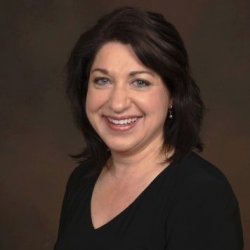
Fran Fasching, DNP, RN, FNP-BC
Fran Fasching is the owner of Nurse Practitioner Professional Medical Writing (NP2 Medical Writing). She is an assistant professor of nursing at DeSales University, PA and a practicing emergency nurse practitioner. She is passionate about continuing education and advocacy in nursing.
Latest posts by Fran Fasching, DNP, RN, FNP-BC (see all)

Antonette Montalvo, MSN, PNP-BC, BSN, RN
Antonette Montalvo, MSN, PNP-BC, BSN, RN, has extensive experience as a Pediatric Nurse Practitioner, in Global Health Nursing, and as a Nurse Entrepreneur. After traveling throughout Central America serving as a health educator and non-profit executive director, she transitioned to working clinically in low-resourced and marginalized communities in pediatric primary care and community health. In 2017, Antonette embarked on a rural community health venture that led her to start her own coaching and consulting business, which has now expanded into her branding as the Visionary Nurse™.
Latest posts by Antonette Montalvo, MSN, PNP-BC, BSN, RN (see all)

Andrea Mosher, CPNP
Andrea Mosher, CPNP is a suburban emergency room RN turned rural primary care pediatric NP. With this drastic evolution in practice, there was a steep learning curve. Now her daily role is based significantly on educating patients and families, so writing freelance health content just seemed to be the perfect fit to share her knowledge with patients and other healthcare workers.
Latest posts by Andrea Mosher, CPNP (see all)
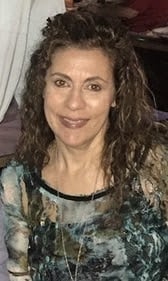
Julie Nyhus
Julie Nyhus is a nurse practitioner and freelance health & medical writer. When she’s not crafting words behind the keyboard, she’s busy biking, boxing, knitting, or playing saxophone with the band. She lives in Indiana, a five-minute walk from Lake Michigan, with her husband and Bernese Mountain dog.
Latest posts by Julie Nyhus (see all)

Amy Quynh L.N. Tran, FNP-C
Amy Quynh L.N. Tran, FNP-C is a licensed Nurse Practitioner with NP experience in Urgent Care, Family Medicine, and Industrial Medicine in California.
Latest posts by Amy Quynh L.N. Tran, FNP-C (see all)
- From Primary Care to Telehealth: Where FNPs Work - June 17, 2026
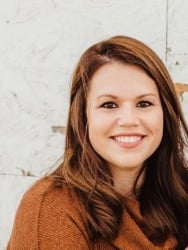
Julie Scott
Julie Scott is an oncology certified Adult Nurse Practitioner and adjunct faculty in a Master’s nursing program.
Latest posts by Julie Scott (see all)
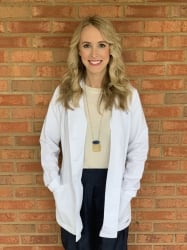
Whitney Weingarten, FNP-C
Whitney Weingarten FNP-C is a nurse practitioner in Atlanta, GA. With a background in primary care, women’s health, and otolaryngology, Whitney has a variety of perspectives to contribute to her patients. Whitney has a passion for preventative care and educating her patients as if they were her family.
Latest posts by Whitney Weingarten, FNP-C (see all)

Michelle Woo, MPH, MS, BSN, RN
Michelle Woo recently obtained her Master's of Science in Nursing from Georgetown University. She also has a Master's in Public Health from Drexel University. Her career goal has been to become a family nurse practitioner and utilize her experience in public health to serve alongside colleagues in the local community.
Latest posts by Michelle Woo, MPH, MS, BSN, RN (see all)