Most important takeaways…
- BLS projects nurse practitioner employment to grow 40% over ten years, making it one of the three fastest growing U.S. occupations.
- National median NP pay now exceeds $126,000 annually, with top metro areas and specialties pushing well above that figure.
- Psychiatric mental health NPs face the most acute shortage, commanding the fastest hiring timelines and largest signing bonuses nationwide.
- Thirty U.S. jurisdictions grant NPs full practice authority, expanding independent practice opportunities and strengthening job markets in those states.
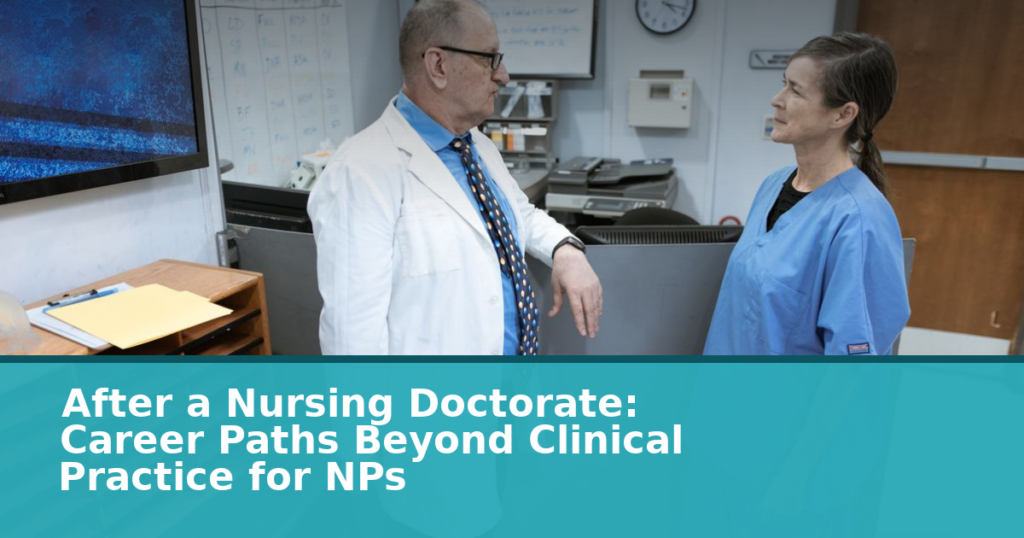
A Wall Street Journal report published in 2026 called nurse practitioner the hottest job in healthcare, and the labor market data backs that up. Reporter Te-Ping Chen profiled Becky Peterson, photographed at a medical-training classroom at the University of North Carolina at Chapel Hill, who completed a two-year graduate program that qualified her to examine patients, make diagnoses, and prescribe medication.1 Peterson's story captures exactly why employers are actively recruiting NPs: clinicians who can perform many physician-level duties, trained in two years rather than a decade, at a fraction of the cost to hire.
The appeal runs in both directions. For healthcare systems facing a physician shortage, NPs solve a staffing problem. For nurses ready to advance, the credential opens a substantially higher pay grade and a level of clinical autonomy that floor nursing rarely offers. The Bureau of Labor Statistics projects a 40% growth rate for NP employment over ten years, placing it among the three fastest-growing occupations in the country. Understanding the evolving role of nurse practitioners helps explain why this momentum shows no signs of slowing.
The harder question is not whether demand is real. It is which specialty, which state, and which program structure position a working nurse to move into that demand most efficiently.
NP Job Growth at a Glance: Where the Numbers Stand in 2026
The numbers tell a compelling story for anyone weighing an NP program right now. The Bureau of Labor Statistics projects nurse practitioner employment to surge 40% over ten years, ranking it among the three fastest-growing occupations in the entire U.S. economy. U.S. News & World Report echoes that momentum, placing NP at the top of its Best Healthcare Jobs list, while The Wall Street Journal calls it the hottest job in healthcare for 2026. For working nurses exploring their next move, this combination of explosive growth, near-zero unemployment, and tens of thousands of annual openings adds up to one of the strongest labor-market positions in any profession.

What's Driving Record Demand for Nurse Practitioners?
The nurse practitioner workforce is not riding a temporary hiring wave. It is expanding in response to deep, structural forces in American healthcare that show no signs of reversing. Understanding these drivers helps you see why pursuing an NP career in 2026 is less of a gamble and more of a strategic move with decades of demand behind it.
A Physician Shortage That Keeps Getting Worse
The Association of American Medical Colleges projects the United States could face a shortfall of up to 86,000 physicians by 2036, with primary care hit especially hard.1 Training a physician takes a minimum of seven years after college, and residency slots are limited by federal funding caps that have barely budged in three decades. The math simply does not work for meeting the healthcare needs of a growing, aging population through physician training alone.
Nurse practitioners are increasingly recognized as a structural solution to this gap, not a stopgap. As The Wall Street Journal reported in 2026, employers are actively seeking clinicians who can perform doctor-like work but are trained faster and cost less. A two-year graduate program can produce an NP who examines patients, prescribes medication, and makes diagnoses, filling roles that would otherwise sit vacant for years waiting on the physician pipeline. NPs already serve as primary care nurse practitioners in communities across the country, and that role is only expanding.
The 65-Plus Population Surge
Every day, roughly 11,000 Americans turn 65. This demographic shift is accelerating demand for primary care, chronic disease management, and geriatric services at a pace that outstrips provider supply. NPs already deliver a large share of primary care visits nationwide, and that proportion is climbing as older adults require more frequent, ongoing clinical attention.2
Cost Efficiency That Employers Cannot Ignore
Healthcare systems operate under relentless financial pressure. NPs offer a compelling value equation: comparable patient outcomes in many settings at a lower total compensation cost and a shorter training timeline. Hospitals, federally qualified health centers, urgent care networks, and retail health clinics are all adding NP positions.3 Retail health and urgent care settings, in particular, have built their staffing models around NP-led care, making them among the fastest-growing practice environments.
Where Employers Are Hiring, and Who They Will Consider
Demand is broad, spanning virtually every practice setting:4
- Primary care and FQHCs: Consistently the largest employers of NPs, with strong openness to hiring new graduates.
- Urgent care clinics: Rapidly expanding and frequently willing to bring on newly certified NPs who can manage episodic, acute conditions.
- Retail health clinics: Among the most new-grad-friendly settings, offering structured protocols and mentorship that help recent graduates build confidence.
- Hospital systems: Growing their NP ranks steadily, often in specialty and hospitalist roles, though these positions may favor candidates with some clinical experience.
- Psychiatric mental health: Demand for PMHNPs is extremely high across all settings, reflecting a national behavioral health crisis with far too few providers.
If you are a working nurse wondering whether the job market will support you after graduation, the data is reassuring. Projected NP job growth between 2024 and 2034 ranges from 40 to 46 percent, and the overall NP supply is expected to grow by 66 percent through 2036.5 New graduates are finding that multiple settings, especially primary care, urgent care, and retail health, are eager to hire them right out of their programs. To understand how demand varies geographically, take a look at which states need nurse practitioners the most.
The takeaway is straightforward: these demand drivers are baked into the demographics, economics, and policy landscape of U.S. healthcare. They are not going away, and neither is the need for nurse practitioners.
Questions to Ask Yourself
NP Salary Outlook: Is Pay Keeping up With Demand?
If you're wondering whether NP salaries are keeping pace with surging demand, the short answer is yes. According to the most recent data from the Bureau of Labor Statistics (2024 Occupational Employment and Wage Statistics), nurse practitioners earn a national median salary of $129,210, a figure that has climbed steadily over the past several years as employers compete for qualified NPs. To put that in perspective, the median annual wage for registered nurses sits around $86,000, meaning NPs typically earn roughly 50% more than their RN counterparts. That salary premium reflects the advanced clinical responsibilities NPs take on, from diagnosing conditions to prescribing medications, and it reinforces the financial value of completing a graduate NP program. With more than 307,000 NPs employed nationally and demand still accelerating, compensation at every level of the pay scale continues to trend upward.
| Pay Percentile | Annual Salary |
|---|---|
| 25th Percentile | $109,940 |
| Median (50th Percentile) | $129,210 |
| 75th Percentile | $149,570 |
Best States for Nurse Practitioner Jobs in 2026
Where you practice matters just as much as what you practice. Some states combine strong salaries with explosive job growth, while others offer high pay in a more competitive landscape. The table below merges the latest wage and employment figures from the U.S. Bureau of Labor Statistics with projected growth rates from state labor departments and Projections Central, giving you a single snapshot to guide your next career move.
| State | Total Employed NPs | Median Annual Salary | Projected Job Growth (2022–2032) | Est. Annual Openings | Full Practice Authority |
|---|---|---|---|---|---|
| California | 20,980 | $166,610 | 58.6% | 2,500 | Yes |
| Texas | 21,690 | $129,880 | 60.0% | 2,240 | No |
| Florida | 24,690 | $129,010 | 58.5% | 2,190 | No |
| New York | 20,430 | $145,390 | 40–42% | 1,640 | Yes |
| Arizona | 7,540 | $133,790 | 71.1% | 860 | Yes |
| Tennessee | N/A | N/A | 57.9% | 1,570 | No |
| North Carolina | N/A | N/A | 55.5% | 920 | No |
| Illinois | 9,560 | $128,620 | 31.0% | 760 | No |
| New Jersey | 9,590 | $149,620 | N/A | N/A | No |
| Massachusetts | 8,920 | $138,890 | N/A | N/A | Yes |
| Oregon | 2,430 | $144,600 | N/A | N/A | Yes |
| Washington | 4,790 | $140,220 | N/A | N/A | Yes |
| Alabama | N/A | N/A | 50.0% | 480 | No |
| Pennsylvania | N/A | N/A | 42.7% | 340–360 | No |
Top-Paying Metro Areas for Nurse Practitioners
Location matters when it comes to NP compensation, but the highest salary on paper doesn't always translate to the most purchasing power. Los Angeles and New York top the pay charts, yet their steep housing and living costs can offset that advantage. Meanwhile, metros like Dallas, Houston, and Phoenix offer strong salaries that stretch considerably further. The table below draws from the most recent Occupational Employment and Wage Statistics published by the U.S. Bureau of Labor Statistics (2024 data) and ranks the largest NP employment metros by mean annual wage.
| Metro Area | Total NP Employment | Mean Annual Wage | Median Annual Wage | 75th Percentile Wage |
|---|---|---|---|---|
| Los Angeles, Long Beach, Anaheim, CA | 6,400 | $165,030 | $164,510 | $184,670 |
| New York, Newark, Jersey City, NY/NJ | 19,850 | $151,510 | $152,790 | $167,870 |
| Boston, Cambridge, Newton, MA/NH | 6,660 | $146,850 | $138,890 | $161,750 |
| Houston, Pasadena, The Woodlands, TX | 4,680 | $133,380 | $133,140 | $143,760 |
| Philadelphia, Camden, Wilmington, PA/NJ/DE/MD | 5,780 | $133,360 | $131,590 | $147,900 |
| Miami, Fort Lauderdale, West Palm Beach, FL | 9,200 | $132,730 | $135,450 | $150,840 |
| Phoenix, Mesa, Chandler, AZ | 5,970 | $132,670 | $134,630 | $151,670 |
| Chicago, Naperville, Elgin, IL/IN | 6,930 | $131,580 | $131,690 | $141,010 |
| Washington, Arlington, Alexandria, DC/VA/MD/WV | 4,430 | $131,380 | $129,920 | $150,380 |
| Dallas, Fort Worth, Arlington, TX | 5,300 | $130,980 | $131,910 | $154,240 |
| Atlanta, Sandy Springs, Roswell, GA | 6,280 | $129,710 | $128,640 | $140,140 |
| Minneapolis, St. Paul, Bloomington, MN/WI | 5,680 | $128,740 | $128,570 | $139,590 |
| Detroit, Warren, Dearborn, MI | 3,850 | $128,140 | $126,110 | $135,030 |
| Tampa, St. Petersburg, Clearwater, FL | 3,810 | $125,970 | $128,430 | $134,190 |
| Nashville, Murfreesboro, Franklin, TN | 5,380 | $112,610 | $116,160 | $129,590 |
Hottest NP Specialties: Where Demand Is Strongest in 2026
Not all nurse practitioner specialties are growing at the same pace, and choosing the right focus area can dramatically shape your earning potential, work-life balance, and long-term career security. Here is a specialty-by-specialty look at where demand is strongest right now and what is fueling each trend.
Psychiatric-Mental Health NP (PMHNP)
PMHNP tops the demand charts in 2026, and it is not particularly close. A national surge in mental health needs, broadened insurance parity requirements, and the explosion of telepsychiatry platforms have created a perfect storm of opportunity.1 Behavioral health systems, federally qualified health centers, correctional facilities, and virtual psychiatric clinics are all competing for these providers. Mean annual compensation sits around $142,000, a healthy premium that reflects how few qualified practitioners are available relative to patient volume.1 If you are comfortable managing complex psychiatric medication regimens and conducting therapy-informed assessments, this specialty offers exceptional job security and flexibility.
Adult-Gerontology Acute Care NP (AGACNP)
AGACNP roles carry the highest salary ceiling on this list, with mean annual wages near $172,000.3 The driver is straightforward: America's aging population is filling ICUs, step-down units, and emergency departments with increasingly complex cases. Hospitals need acute care NPs embedded on hospitalist, cardiology, and surgical teams to manage that acuity around the clock. If you are weighing this path against a broader primary care track, our breakdown of AGNP vs. FNP differences can help clarify which scope fits your clinical interests. If you thrive in fast-paced, high-stakes environments, this specialty rewards both the intensity and the expertise it demands.
Family NP (FNP)
FNP remains the broadest and most versatile certification, though its demand level is more moderate compared with the acute shortages in psychiatric and acute care tracks.2 Growth here is driven by primary care expansion, retail health clinics, and urgent care networks that continue to proliferate in suburban and rural communities. Mean annual compensation hovers around $130,000.1 The trade-off for a slightly lower salary premium is unmatched flexibility in practice setting and geography.
Neonatal NP (NNP)
Neonatal NPs are in high demand at Level III and Level IV NICUs as well as maternal-fetal medicine programs. The pipeline of NNP graduates is small, and NICU beds remain a cornerstone of perinatal care, keeping competition for these providers fierce. Mean annual wages reach approximately $152,000, reflecting both the specialized skill set and the limited talent pool.1
Pediatric NP
Demand for pediatric NPs sits at a moderate but steady level in 2026. Growth is linked to rising need for pediatric specialty care across children's hospitals, NICUs, school-based health programs, and outpatient subspecialty clinics. Mean annual compensation is around $122,500. This specialty appeals to clinicians who want longitudinal relationships with young patients and families.
Women's Health NP (WHNP)
WHNP demand is similarly moderate and closely tied to OB-GYN workforce shortages and expanding reproductive health access. Practice settings range from obstetric and gynecology groups to reproductive health clinics and urogynecology practices. Mean annual wages are roughly $122,500. While not experiencing the explosive growth of PMHNP or AGACNP, women's health remains a stable, rewarding niche with consistent patient volume.
How to Use This Information
When weighing specialties, consider more than salary alone. For a deeper dive into compensation by role and location, explore nurse practitioner salary by specialty. Think about:
- Patient population: Do you connect most with adults in crisis, newborns, children, or women navigating reproductive health?
- Practice environment: Are you drawn to hospital-based acute care or outpatient and telehealth flexibility?
- Market leverage: Specialties with high demand and small graduate pipelines (PMHNP, AGACNP, NNP) give you stronger negotiating power on compensation, schedule, and signing incentives.
- Long-term trajectory: An aging population and persistent mental health gaps suggest that AGACNP and PMHNP demand will remain elevated well beyond 2026.
Salary figures referenced here reflect 2025 mean annual wage data from industry compensation reports. Actual offers vary by region, experience, and employer type, but the relative hierarchy across specialties has been remarkably consistent.
Telehealth, Rural Care, and Emerging Practice Settings
The permanent expansion of telehealth has opened a new frontier for nurse practitioners, creating opportunities that simply did not exist a few years ago.
The Telehealth Boom: Remote NP Practice Goes Mainstream
Telehealth is no longer a stopgap measure. It is a core delivery model. In 2026, approximately 62% of psychiatric mental health nurse practitioner (PMHNP) job postings are fully remote, and remote psychiatric NP demand has grown 12% year over year.1 Platforms like Talkiatry, Cerebral, Done., Brightside Health, and Grow Therapy are hiring aggressively, alongside direct-to-consumer models such as WeightWatchers, which offers telehealth NP roles at $65 to $75 per hour.2 Beyond behavioral health, NPs now manage chronic conditions, urgent care, and primary care visits across state lines under updated compact agreements and permanent telehealth reimbursement policies. For a deeper look at licensing rules and pay rates, our guide to telehealth expansion for nurse practitioners breaks it all down. Job boards like NPHire list 176 active telehealth NP positions spanning multiple specialties, signaling a structural shift in how advanced practice care is delivered.2
Bridging the Rural Gap: NPs as Primary Providers in Underserved Areas
In rural healthcare deserts, nurse practitioners are often the sole accessible provider. Full practice authority, now in place in over half of U.S. states, allows NPs to diagnose, prescribe, and manage patient panels without physician oversight, making them indispensable in small towns and frontier communities. You can explore the full landscape in our article on nurse practitioners in rural healthcare. Federal incentives such as National Health Service Corps loan repayment and Rural Health Clinic designations further strengthen the business case for NP-led practices in shortage areas. State-level data underscores the demand: California projects 2,500 annual NP openings with a 58.6% growth rate, Texas 2,240 openings at 60% growth, and Arizona a staggering 71.1% growth rate, all fueled by rural and underserved population needs.3
New Frontiers: Retail Clinics, Schools, and Employer-Based Care
Emerging practice settings are pulling NPs out of hospitals and into everyday life. Retail health clinics like CVS MinuteClinic and Walgreens now employ NPs to provide accessible, walk-in care. School-based health centers integrate NPs to manage adolescent physical and behavioral health. Employer-sponsored clinics are growing as companies seek to contain healthcare costs, while correctional health systems increasingly rely on NPs to address chronic disease and mental health needs in a cost-effective setting. These environments offer predictable hours, strong compensation, and the chance to build long-term patient relationships outside the traditional hospital hierarchy, factors that resonate with nurses seeking career flexibility and autonomy.
How Full Practice Authority Is Reshaping the NP Job Market
As of 2026, 30 U.S. jurisdictions, including 27 states, Washington D.C., and two territories, grant nurse practitioners full practice authority (FPA).1 This legal milestone means NPs in those locations can examine patients, make diagnoses, order and interpret tests, and prescribe medications without a mandated collaborative agreement with a physician. The shift is not just regulatory; it is fundamentally altering hiring patterns, career trajectories, and patient access across the country.
What Full Practice Authority Really Means
FPA removes the requirement for a supervising or collaborating physician, allowing NPs to practice to the full extent of their graduate education and national certification.2 In restricted or reduced-practice states, NPs must secure a formal relationship with a doctor for certain aspects of care, often adding administrative overhead, delaying deployment, and limiting where they can work. With FPA, NPs can be hired directly by hospitals, retail clinics, and private practices, and they can open their own clinics independently. This autonomy has made the NP role far more attractive to both new graduates and experienced nurses considering career advancement. For a complete breakdown of where NPs can practice independently, see our guide to full practice authority states.
The APRN Licensure Compact: A New Era for Cross-State Work
A parallel development is the APRN Licensure Compact, which would let NPs hold a single multistate license and practice in all member states, much like the Nurse Licensure Compact already does for RNs. As of early 2025, seven states (including Utah, North Dakota, and Delaware) have enacted compact legislation, but the compact is not yet effective; it becomes operational when 10 states join.2 Until then, NPs must still obtain separate licenses for each state where they practice, even for telehealth visits, since laws typically require licensure in the patient's location. Once activated, the compact will massively streamline telehealth service delivery and locum tenens nurse practitioner assignments, particularly benefiting NPs in FPA states who can practice across borders without additional physician agreements.
Job Market Realities: Autonomy, Entrepreneurship, and Access
The impact on the ground is tangible. Multiple analyses and employer surveys indicate that FPA states tend to have higher NP employment per capita and a greater number of NP-owned clinics. When health systems can hire NPs who operate at the top of their license without the added cost and scheduling constraints of a supervising doctor, they build more flexible care teams. This is especially critical for rural and underserved communities, where physician shortages are acute and NPs are often the primary source of care. While exact wage comparisons vary, the ability to practice independently often strengthens NPs' negotiating position and opens doors to entrepreneurial paths that simply aren't viable in restricted states.
States to Watch in 2026
South Carolina remains a restricted-practice state, but a bill (3580) introduced in the current legislative cycle seeks to grant FPA.3 If passed, it would join a growing list of states that have moved toward full authority in recent years. While no new FPA adoptions occurred in the 2025-2026 session as of the AANP's May 2026 update, the legislative momentum continues, fueled by data showing improved healthcare access and cost savings where NPs practice independently.1 If you're interested in shaping these outcomes, consider exploring our nurse practitioner health policy toolkit.
Full Practice Authority by the Numbers
Where nurse practitioners can practice independently, the job market tends to be strongest. States that grant full practice authority (FPA) allow NPs to evaluate patients, diagnose, and prescribe without physician oversight. As of 2026, the majority of U.S. states and territories have adopted FPA, and these states consistently show higher NP employment density and more competitive salaries compared to states with reduced or restricted practice environments.

What This Means for Your NP Career: Next Steps
Which NP specialty and which state give me the best shot at a high-paying job right now?
That is the practical question underneath all the job-growth headlines, and the answer depends on how you weigh flexibility, earning potential, and where you want to live.
Choose Your Specialty with the Demand Data in Mind
The numbers in this article point toward a few clear opportunities. Psychiatric-mental health nurse practitioners face the most acute shortage, which translates directly into signing bonuses, above-average salaries, and your pick of settings. If mental health care resonates with you clinically, the PMHNP track offers the most leverage in today's market.
Family nurse practitioners remain the most versatile credential. FNP opens doors in primary care, urgent care, telehealth, and retail health, and that breadth makes it a strong default if you are not yet committed to a single population. You can compare this pathway with others, including the AGNP vs FNP decision, to determine which scope of practice fits your clinical interests.
For nurses already working in hospitals and ICUs, the adult-gerontology acute care NP (AGACNP) track positions you for high-acuity inpatient roles that are genuinely hard to fill. Hospitals competing for acute-care NPs are offering competitive packages precisely because the pipeline is thin.
Think Geographically, Even If You Plan to Work Remotely
If you have any flexibility on location, targeting a full practice authority state removes the supervision requirement and opens a wider pool of employers. States that have joined the APRN Compact also make it easier to hold licensure in multiple states, which matters enormously for telehealth roles. A telehealth-first employer can give you near-complete location independence, but hiring in a compact state still gives you more options down the road.
MSN or DNP: Both Get You There
A two-year MSN-level program qualifies you for national NP certification and independent practice. Exploring online MSN NP programs is one of the fastest ways to compare accredited options that fit a working nurse's schedule. A DNP adds depth and positions you for leadership, faculty, and policy roles, but it takes longer. Neither path is universally better. The right choice depends on your timeline and your goals. If entering the workforce sooner is the priority, the MSN route gets you there faster without sacrificing the credential that employers actually require.
The Window Is Open Now
Enrollment in NP programs is climbing. More seats, more graduates, and more supply will eventually cool the signing bonuses and compress the salary premiums visible today. The nurses who start their programs in the next year or two will graduate into the peak of this demand curve. Understanding how long it takes to become a nurse practitioner can help you map out a realistic timeline. Waiting has a real cost. The data in this article reflects a market that is still wide open. The question is whether you want to be practicing when the demand is highest, or watching from the sideline while a colleague takes the offer you could have had.
Frequently Asked Questions About the NP Job Outlook
These are some of the most common questions nurses ask when evaluating a move into advanced practice. The answers draw on federal projections, salary data, and legislative trends covered throughout this article.
- What is the job outlook for nurse practitioners in 2026?
- The outlook is exceptionally strong. Federal labor projections place nurse practitioner job growth well above the average for all occupations, and a 2026 Wall Street Journal report identified NP as the fastest growing field in healthcare. Employers across hospitals, clinics, and telehealth platforms are actively recruiting NPs to fill gaps left by physician shortages, making this one of the most secure career paths in the industry right now.
- Is nurse practitioner the fastest-growing healthcare job?
- By most measures, yes. The Bureau of Labor Statistics has consistently ranked NP among the occupations with the highest projected growth rates. The Wall Street Journal reinforced this in 2026, noting that employers are seeking clinicians who can perform many physician duties but are trained faster, often through two year graduate programs, and at a lower cost to health systems.
- Which NP specialty has the highest demand right now?
- Psychiatric mental health nurse practitioners (PMHNPs) face some of the strongest demand in 2026 due to a severe behavioral health provider shortage nationwide. Other high demand specialties include family practice, adult gerontology, and acute care. Specialty choice can significantly influence both salary potential and geographic flexibility, so it is worth researching regional needs before committing to a program.
- What states have the best job market for nurse practitioners?
- States with full practice authority tend to offer the most favorable job markets because NPs can evaluate, diagnose, and prescribe independently without physician oversight. States with large rural or underserved populations also generate heavy demand. California, Texas, and New York rank among the top states by total NP employment, while states like Arizona, Montana, and Oregon combine full practice authority with growing healthcare needs.
- How does full practice authority affect NP job opportunities?
- Full practice authority removes the requirement for a collaborating physician, which lets NPs open independent practices, lead clinics, and serve rural communities that lack physician coverage. States that grant full practice authority generally see faster NP job growth and broader scope of employment settings. For nurses considering relocation, practicing in a full practice authority state can open doors that restrictive states simply do not offer.
- Are nurse practitioner salaries going up in 2026?
- Yes. Median NP compensation has risen steadily over the past several years, and 2026 salary data shows continued upward pressure driven by competition for qualified candidates. Specialty, geography, and practice setting all influence earnings. PMHNPs and acute care NPs often command premium pay, and NPs in metropolitan areas with high costs of living tend to see the largest compensation packages.
- Can nurse practitioners practice via telehealth across state lines?
- It depends on state licensing requirements. Some states participate in the APRN Compact, which allows NPs holding a multistate license to practice across member state lines, including via telehealth. Outside the compact, NPs typically need a license in the state where the patient is located. Telehealth demand is growing rapidly in 2026, so understanding compact membership and interstate licensing rules is an important step before pursuing a telehealth focused role.