
Most important takeaways…
- Florence Nightingale's hygiene reforms cut the Scutari hospital mortality rate from roughly 42% to just 2% in six months.
- Loretta Ford cofounded the first nurse practitioner program in 1965, launching a role that now employs hundreds of thousands.
- Pediatric, military, public health, and mental health nursing each owe key advances to individual nurses who built entirely new institutions.
- Today's famous nurses shape the profession through policy reform, health tech entrepreneurship, and national advocacy rather than battlefield care alone.
More than 4.2 million registered nurses currently practice in the U.S., yet almost every standard of modern nursing education, specialization, and advanced practice traces back to a small circle of pioneers who reshaped the field across two centuries.
Florence Nightingale is the name most people recognize, but the profession's foundation rests on a much broader group. Battlefield reformers, pediatric visionaries, nurse practitioner founders, and modern policy advocates each exposed a gap in care that existing institutions would not fill.
Their work didn't just expand patient access; it created the degree ladders, scope-of-practice precedents, and specialization tracks that working nurses now rely on when advancing their own careers.
What Makes a Nurse 'Famous'? Our Selection Criteria
Not every nurse who deserves recognition makes history books, so building a credible list requires clear, defensible standards.
Four Criteria That Guided Every Selection
Each nurse featured in this article was evaluated against the same four benchmarks:
- Measurable impact on patient outcomes or public health: Wherever the historical record allows, we looked for concrete evidence, whether that was a documented reduction in hospital mortality rates, the eradication or control of a communicable disease, or a statistically significant improvement in maternal and child health.
- Institutional legacy: Did this nurse found a hospital, establish a formal training program, shape a professional organization, or influence legislation that outlasted them? Lasting structures carry more weight than individual acts of heroism, however admirable those acts may be.
- Representation across eras, specialties, and demographics: A list that only highlights 19th-century European women would miss the full arc of nursing history. We intentionally include historical and contemporary figures, generalists and specialists (pediatric, advanced practice, public health, and military), and nurses whose backgrounds reflect the diverse communities they served.
- Lasting influence on modern nursing practice: The clearest test is whether today's nurses still feel the downstream effects of this person's work, in the form of clinical protocols, educational standards, legal protections, or professional culture.
How This List Differs From Generic Roundups
Many competitor lists recycle the same five or six names without explaining why those individuals made the cut. This article treats the selection process as transparent and repeatable. Where quantitative impact data exists, such as mortality statistics, patient census figures, or policy reach, we use it. Where the record is qualitative, we say so plainly rather than inflating the evidence.
The Intentional Balance
You will find nurses here who worked in operating theaters and those who lobbied Congress, shaping politics and nursing policy for generations. Some are celebrated globally; others shaped a single specialty so thoroughly that every practitioner in that field works within the framework they built. If you are curious about how today's nurse practitioner specialties evolved from that foundation, the connections are direct. The balance between historical giants and nurses making an impact right now in 2026 is deliberate: honoring the past matters, but so does recognizing that the story is still being written by nurses working today.
Nurses Who Changed the Course of Healthcare
Some nurses built their legacy through hands-on patient care during wartime crises, while others transformed healthcare through advocacy, policy reform, and institution-building. The four pioneers profiled here represent both paths, and their combined impact stretches across continents and centuries. Understanding what made them effective can help you identify which aspects of nursing leadership resonate most with your own career aspirations.
Florence Nightingale: The Founder of Modern Evidence-Based Nursing
When people ask, "What did Florence Nightingale do for nursing?" the answer begins in the military hospitals of the Crimean War. In 1854, Nightingale arrived at the British army hospital in Scutari with 38 volunteer nurses and encountered conditions so dire that the mortality rate among wounded soldiers hovered around 40 percent.1 Over the next two years, she implemented systematic sanitation protocols, improved ventilation, and organized supply chains for clean linens and nutritious food.
The results were measurable and dramatic. By 1856, the mortality rate had dropped to roughly 2 percent.1 What set Nightingale apart from other reformers was her insistence on collecting and analyzing data over a 24-month period (April 1854 through March 1856) to prove her interventions worked. Her statistical diagrams, including the famous "coxcomb" charts, became some of the earliest examples of data visualization used to influence public health policy.
In 1860, Nightingale founded the Nightingale Training School at St. Thomas' Hospital in London, establishing nursing as a profession grounded in formal education rather than informal apprenticeship. Her emphasis on hygiene, patient observation, and evidence-based practice continues to shape nursing curricula worldwide.
Mary Eliza Mahoney: Breaking Barriers as the First African American Licensed Nurse
Who was the first African American nurse? Mary Eliza Mahoney earned that distinction in 1879 when she graduated from the New England Hospital for Women and Children's nursing program in Boston. Of the 42 students who entered her cohort, only four completed the rigorous 16-month curriculum, and Mahoney was the only Black graduate.
Her achievement opened doors, but Mahoney recognized that individual success would not dismantle systemic racism in healthcare. In 1908, she co-founded the National Association of Colored Graduate Nurses (NACGN), an organization that advocated for Black nurses' professional recognition and fought discriminatory hiring practices. The NACGN eventually merged with the American Nurses Association in 1951, but its legacy lives on through scholarship programs and diversity initiatives that continue today. The American Nurses Association now presents the Mary Mahoney Award to nurses who advance equal opportunities in the profession.
Clara Barton: From Battlefield Nurse to Humanitarian Institution-Builder
Clara Barton earned the nickname "Angel of the Battlefield" for her work during the American Civil War, where she personally delivered supplies and cared for wounded soldiers at some of the conflict's bloodiest engagements, including Antietam and Fredericksburg. But her most lasting contribution came after the war ended.
In 1881, Barton founded the American Red Cross, modeling it after the International Red Cross she had observed during travels in Europe. Under her leadership, the organization expanded beyond wartime relief to include disaster response for floods, hurricanes, and epidemics. By the time of her death in 1912, the American Red Cross had responded to more than 21 major disasters and established a network of local chapters that would eventually grow to serve millions of Americans annually. Today, the organization collects approximately 40 percent of the nation's blood supply and trains millions in first aid and CPR each year.
Dorothea Dix: Championing Mental Health Reform and Wartime Nursing Standards
Dorothea Dix was not a nurse by training, but her advocacy reshaped both mental health care and nursing administration in the United States. After witnessing the inhumane treatment of mentally ill individuals in Massachusetts jails during the 1840s, she launched a decades-long lobbying campaign that resulted in the establishment of more than 32 state-funded mental health institutions across the country.
When the Civil War began, Dix was appointed Superintendent of Army Nurses for the Union, making her the first woman to hold a major federal executive appointment. She recruited, trained, and oversaw thousands of female nurses, establishing standards for professional conduct and patient care that influenced military nursing for generations. Her dual legacy in mental health reform and nursing administration demonstrates how policy advocacy and clinical practice can reinforce each other to create systemic change. If Dix's story inspires you to think about how nurses in politics can drive reform, that same spirit of advocacy remains vital for today's nurse practitioners.
During the Crimean War, Florence Nightingale used statistical diagrams to show that unsanitary conditions were killing soldiers. After she implemented hygiene reforms, the mortality rate at the Scutari hospital plummeted from roughly 42% to just 2% within six months.
Famous Pediatric Nurses and Their Legacy in Child Healthcare
Pediatric nursing did not begin as a specialty. For most of nursing history, children were treated as small adults, placed in general wards alongside grown patients and cared for with little understanding of how childhood illness, fear, and development shape clinical needs. The nurses who changed that reality did so by challenging assumptions, publishing new frameworks, and building institutions where none existed.
Florence Nightingale's Early Argument for Children
Long before pediatric nursing earned its own professional identity, Florence Nightingale was already making the case that children required a different standard of care. Working in the 1850s, she reduced patient mortality in military hospitals from roughly 42 percent down to around 2 percent through sanitation and systematic nursing practice.1 What is less frequently cited is that by 1860 she was actively recommending that children's wards be staffed at double the ratio applied to adult wards.2 That specific recommendation, written into her training guidance, planted an early seed: child patients are not a subset of adult patients. They are a distinct clinical population.
Florence Guinness Blake and Family-Centered Care
The nurse who most directly shaped modern pediatric nursing as a discipline is Florence Guinness Blake (1907, 1983). In 1954, Blake published a foundational text that introduced family-centered care as the organizing principle for working with hospitalized children.3 The idea sounds intuitive now, but at the time it was a genuine departure. Hospitals routinely restricted parents from visiting, believing separation reduced infection risk and kept wards orderly. Blake argued, with clinical and developmental evidence, that children recover better when their families are present and involved. Her model became the framework that pediatric units across the country eventually adopted, and its influence is still visible in how children's hospitals are designed and staffed today.
Mary Breckinridge and Care Reaching Rural Children
Mary Breckinridge (1881, 1965) approached child health from a different angle. Recognized as the first nurse-midwife in the United States, she founded the Frontier Nursing Service in 1925 to bring skilled maternal and child healthcare to rural Appalachian communities that had almost none.3 Her service reached families in areas where child mortality from preventable causes was far above the national average, and it demonstrated that advanced-practice nurses could deliver high-quality care independently in underserved settings. That proof of concept shaped the policy arguments that would eventually support nurse practitioner scope of practice decades later.
The Formalization of a Specialty
Pediatric nursing's professional infrastructure took shape gradually, with the Society of Pediatric Nurses founding in 1990 marking a clear institutional milestone.1 That organization gave pediatric nurses a unified professional home, a vehicle for developing specialty certifications, and a platform for establishing child-specific care standards at a national level. If you are considering this path today, exploring accredited online pediatric nurse practitioner programs is a practical first step. The progression from Nightingale's staffing recommendations to Blake's family-centered model to Breckinridge's rural practice innovations to a formal professional society tracks the arc of pediatric nursing: from an afterthought within general nursing to a recognized, credentialed specialty with its own body of knowledge.
Famous Nurse Practitioners and Advanced Practice Pioneers
Who founded the nurse practitioner profession, and how did one program become a nationwide workforce of hundreds of thousands?
Loretta Ford and the Birth of a New Role
In the early 1960s, rural Colorado faced a serious shortage of pediatric care. Children in remote communities had limited access to physicians, and the gap was widening. Loretta Ford, a public health nurse who had spent years working in those underserved areas, saw something her colleagues in academic medicine sometimes missed: nurses were already stepping into that space, and they were doing it well.
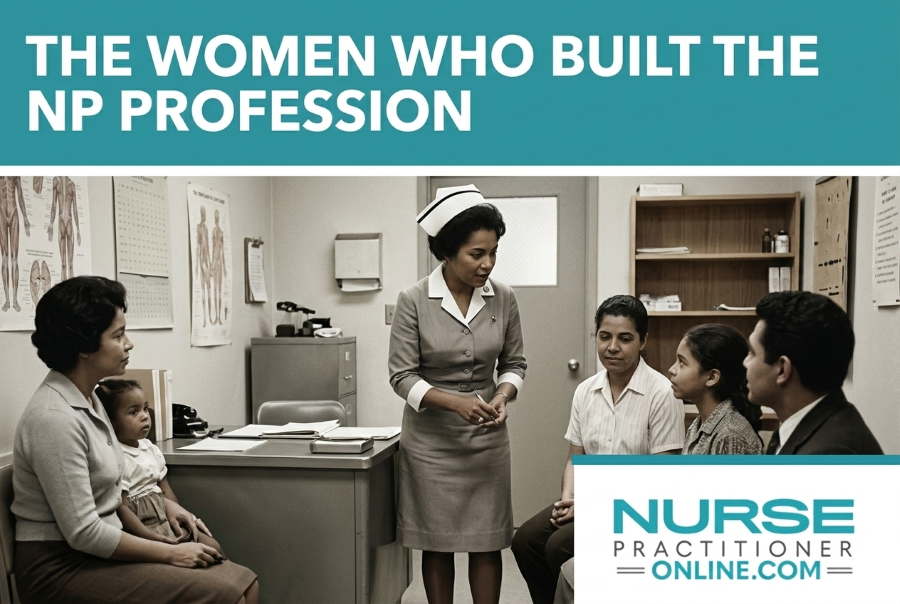
In 1965, Ford partnered with pediatrician Henry Silver at the University of Colorado to formalize what nurses were already doing in practice.1 Together, they launched the first nurse practitioner program in the United States, training nurses to assess, diagnose, and manage common childhood illnesses, particularly in areas where physician access was limited. The program was designed to expand capacity without replacing the physician relationship. Ford's vision was not simply about filling a gap. She believed advanced practice nursing represented a distinct and valuable contribution to healthcare, not a workaround. For a deeper look at the women who built the nurse practitioner profession, their stories reveal just how deliberate that founding vision was.
From One Program to a National Profession
The idea spread quickly. Boston College launched its own NP program in 1967, and others followed across the country.2 By 1974, the American Nurses Association had formed a dedicated council to support and organize the growing specialty. In 1985, the American Academy of Nurse Practitioners was founded, giving the profession a unified advocacy voice.3
The growth trajectory is striking. What began as a single program in 1965 has expanded into a profession with more than 431,000 licensed nurse practitioners across the United States, with over 355,000 actively employed as of 2022.3 Ford's founding vision, that NPs could deliver high-quality, patient-centered care independently and effectively, proved out across six decades of practice and research.
Fighting for the Right to Practice
Expanding the NP role required more than educational programs. It required policy change, and those battles were hard-fought.
Idaho became the first state to formally recognize NPs in law in 1971, a milestone that set a precedent for legislative recognition elsewhere.1 But prescriptive authority and reimbursement took longer. The Omnibus Reconciliation Act of 1989 granted NPs limited reimbursement through Medicare, a partial but meaningful step.4 It was not until the Balanced Budget Act of 1997 that NPs gained the right to bill Medicare directly, regardless of practice setting or geographic location.4
The fight for full practice authority, meaning the ability to evaluate, diagnose, and treat patients without a required physician collaboration agreement, is still ongoing in many states. Today, a growing number of NPs serve as primary care nurse practitioners, a role that reflects decades of advocacy. As of 2026, roughly half of U.S. states have adopted full practice authority, while others retain varying degrees of supervision or collaboration requirements. The work Ford and Silver began in a Colorado classroom continues to play out in state legislatures and federal policy debates today.
What These Pioneers Mean for You
If you are a registered nurse considering the NP path, the history of this profession is directly relevant to your future. The scope of practice you will have, the autonomy you will exercise, and the patients you will serve were all shaped by advocates who refused to accept an artificially narrow definition of nursing's potential. Whether you are exploring nurse practitioner advancement opportunities or weighing your first steps, understanding that history is not just interesting. It is grounding.
Questions to Ask Yourself
Famous Nurses by Specialty: Military, Public Health, Mental Health, and More
Battlefield triage and tenement house calls demand very different skills, yet both produced some of nursing's most enduring legacies. Looking at history through the lens of specialty reveals how broad the profession really is, and how each branch has been shaped by a handful of determined practitioners.
Military Nursing: Courage Under Fire
Military nursing has long attracted nurses willing to practice at the edge of human endurance. Edith Cavell, a British nurse working in German-occupied Belgium during World War I, treated wounded soldiers from both sides without discrimination. She also helped roughly 200 Allied soldiers escape occupied territory, an act of conscience that ultimately cost her life and made her a symbol of nursing's moral courage.1
Decades later, Hazel W. Johnson-Brown broke barriers of a different kind. She became the first African American woman to lead the U.S. Army Nurse Corps and the first to be promoted to brigadier general, opening doors for generations of nurses of color in military and academic leadership.2
Public Health Nursing: Care Beyond the Hospital Walls
Public health nursing took root when Lillian Wald founded the Henry Street Settlement in New York City in 1893. Her visiting nurses brought care directly into immigrant tenements, treating illness while also addressing the housing, sanitation, and labor conditions that caused it. Wald's model still shapes how community health nurses think about social determinants today, and her legacy illustrates why public health needs nurse practitioners now more than ever.
Mental Health Nursing: Naming the Therapeutic Relationship
Hildegard Peplau is often called the mother of psychiatric nursing. Her interpersonal theory, introduced in the mid-twentieth century, reframed the nurse-patient connection itself as a therapeutic tool, giving mental health nurses a clinical framework that goes well beyond medication management. Today, psychiatric-mental health NPs can deepen that clinical foundation through online PMHNP programs that build on Peplau's interpersonal approach.
Hospice and Oncology Nursing: A Gentler End
Dame Cicely Saunders trained as a nurse before becoming a physician, and her clinical roots informed everything that followed. She founded the modern hospice movement in the 1960s, insisting that dying patients deserved skilled symptom control, emotional presence, and dignity. Today's palliative care and oncology nursing specialties trace their philosophical foundation directly to her work.
Each of these nurses worked in a different setting, but they share one trait: they expanded what nursing could mean for the patients in front of them.
Famous Nurses Making an Impact Today
Today's prominent nurses build influence not through battlefield heroics or founding brick-and-mortar institutions, but through policy reform, health-tech entrepreneurship, and national advocacy. The routes to recognition have shifted, and the profession is richer for it.
Nurses Leading Policy and Advocacy
Ernest J. Grant, the immediate past president of the American Nurses Association, made history as the first male to hold that office.1 During his tenure (2018 to 2022) and his ongoing advocacy through 2026, he steered the profession through pandemic-era crises by fighting for PPE access, vaccine equity, and workplace safety protections. In 2022, Modern Healthcare named him one of its 50 Most Influential Clinical Executives, a direct reflection of his policy footprint.1 His legacy shows that modern nurse leaders can shape national health policy from inside major organizations.
Shaping Nursing Education for the Future
Beverly Malone exemplifies how a nurse executive can influence the entire pipeline of care. As CEO of the National League for Nursing throughout the 2020s, she drives strategy on faculty shortages, new education models, and diversity within nursing schools.1 Her earlier role as deputy assistant secretary for health in the U.S. Department of Health and Human Services gave her an intimate view of federal policy levers. By blending that experience with her NLN platform, Malone ensures that nursing education evolves to meet challenges like telehealth expansion and a projected 5% job growth rate for the profession from 2024 to 2034.2
The Rise of the Nurse Entrepreneur
A modern path to renown, and to solving healthcare's thorniest problems, is entrepreneurship. Rebecca Love, RN, founded the Society of Nurse Scientists, Innovators, Entrepreneurs and Leaders (SONSIEL), an organization that spotlights and supports nurse-led innovation. While historical figures like Florence Nightingale founded institutions over decades, Love has used social media and conference platforms to build a global community of nurses who design care-delivery solutions, often in digital health and telehealth, fields where 25 to 30% of visits are now projected to be virtual.3 Entrepreneurial nurses are founding startups, earning investment, and proving that a nurse badge can be as powerful in a venture capital pitch as in a clinic.
The New Face of Fame in Nursing
Where 19th-century pioneers gained recognition through wartime service or building the first training schools, today's influential nurses may never start a school or serve overseas. Instead, they might serve on a governor's pandemic task force, inform legislation affecting 43 Nurse Licensure Compact jurisdictions, or shape public opinion through a LinkedIn following.3 With an 89% trust rating in 2020 polls, nurses hold a unique platform.2 Fame now arrives through government advisory posts, executive C-suite roles, or the launch of a health-equity app, a broadening of impact that makes nursing leadership more diverse and immediate than ever before.
Timeline: Key Milestones in Nursing History
From the founding of modern nursing education to breakthroughs in advanced practice, these milestones mark turning points that shaped the profession you know today. Each one opened doors that continue to benefit nurses and patients alike.

How These Pioneers Can Inspire Your Nursing Career
Choosing which nursing path to pursue often means weighing your passion for a particular specialty against the practical realities of education, time, and career outcomes. The nurses profiled throughout this article faced similar crossroads, and their choices created the very pathways you can follow today. Understanding how their work connects to modern education and practice can help you identify where your own contributions might fit.
From Historical Movements to Modern Programs
The education programs available to you today did not emerge in a vacuum. They trace directly to the advocacy and innovation of nursing pioneers who saw gaps in healthcare and refused to accept them.
Florence Nightingale's insistence on data collection and environmental factors in patient outcomes laid the groundwork for what we now call evidence-based practice. If you find yourself drawn to improving systems, analyzing outcomes, or leveraging technology to enhance care, consider how her legacy lives on in nursing informatics and quality improvement roles. Many DNP programs now include informatics concentrations that build directly on her foundational principles.
Loretta Ford's creation of the nurse practitioner role in 1965 established the very credential many readers of this article are pursuing. Every family nurse practitioner program, every acute care track, and every psychiatric-mental health NP curriculum exists because she proved that nurses could safely and effectively provide primary care. When you enroll in an NP program, you are continuing work she started six decades ago. If you want to learn more about the steps involved, our guide on how to become a nurse practitioner walks you through the full process.
Lillian Wald's public health nursing model in New York's Lower East Side pioneered community-based care that addressed social determinants of health. Today's community health nursing programs and public health NP tracks carry forward her belief that healthcare must meet people where they live. If you are passionate about health equity and population-level interventions, her approach offers a blueprint.
Dorothea Dix's tireless advocacy for humane treatment of individuals with mental illness helped establish psychiatric nursing as a recognized specialty. Modern psychiatric-mental health nurse practitioner programs prepare clinicians to address a mental health crisis that Dix would have recognized instantly, even if the treatments have evolved dramatically.
Your Concrete Next Steps
Knowing this history is valuable, but translating inspiration into action requires practical decisions. If these pioneers' stories resonate with you, consider these pathways:
- Evidence-based practice and informatics: Explore MSN or DNP programs with informatics or quality improvement concentrations.
- Primary care and family health: Review accredited family nurse practitioner or adult-gerontology primary care programs.
- Community and public health: Look into community health nursing certifications or public health NP tracks.
- Mental health advocacy: Consider psychiatric-mental health nurse practitioner programs, one of the fastest-growing NP specialties.
Each of these paths offers certifications for nurse practitioners that can further distinguish your practice and connect you to professional communities carrying forward these historical movements. Comparing options like the acute care NP vs primary care NP track can also help you narrow your focus.
The Next Famous Nurse
Every nurse profiled in this article started exactly where you are: recognizing a problem and deciding to address it. The next pioneering figure in nursing history might be someone reading these words right now, someone who sees a gap in care, education, or advocacy and chooses to fill it. Your clinical observations, your community connections, and your willingness to push boundaries are the same qualities that made these nurses famous. The difference between admiring their work and joining their ranks is simply deciding to start.
Frequently Asked Questions About Famous Nurses
These are some of the most common questions nurses and students ask about the legendary figures who shaped the profession. Each answer draws on the stories and milestones explored throughout this article.
- Who is the most famous nurse in history?
- Florence Nightingale is widely regarded as the most famous nurse in history. Her data-driven reforms during the Crimean War in the 1850s dramatically reduced soldier mortality rates, and she went on to establish the first professional nursing school at St. Thomas' Hospital in London in 1860. Her legacy earned her the title 'founder of modern nursing.'
- Who was the first African American nurse?
- Mary Eliza Mahoney is recognized as the first African American to earn a professional nursing degree, graduating from the New England Hospital for Women and Children in 1879. She spent her career advocating for racial equality in the profession and co-founded the National Association of Colored Graduate Nurses, paving the way for future generations of nurses of color.
- What did Florence Nightingale do for nursing?
- Nightingale transformed nursing from an informal role into a respected, evidence-based profession. She pioneered sanitation practices in military hospitals, developed early forms of statistical data visualization to advocate for public health reforms, and established formal nurse training programs. Her work laid the foundation for modern standards of patient care and hospital hygiene.
- Which famous nurses were nurse practitioners?
- Loretta Ford is the most notable pioneer, having co-founded the first nurse practitioner program at the University of Colorado in 1965. Her vision expanded the scope of nursing practice to include diagnosis, treatment, and health promotion. Today, NPs across specialties continue building on the advanced practice framework she helped create.
- Who are some famous nurses today?
- Contemporary nursing leaders making an impact include educators, researchers, policy advocates, and frontline innovators who gained visibility during the COVID-19 pandemic. Many are advancing telehealth, health equity initiatives, and evidence-based practice. Their contributions remind us that the tradition of nursing leadership is very much alive and evolving in 2026.
- Who are the most famous pediatric nurses?
- Lillian Wald stands out for her pioneering public health work with children on New York City's Lower East Side in the late 1800s and early 1900s. She founded the Henry Street Settlement and helped create the federal Children's Bureau. Her advocacy for school nursing programs and child welfare legislation shaped pediatric care for generations to come.