
Best Online Pediatric Nurse Practitioner Programs in Tennessee
Page Sections
Use the drop down menu below to jump to a specific section.
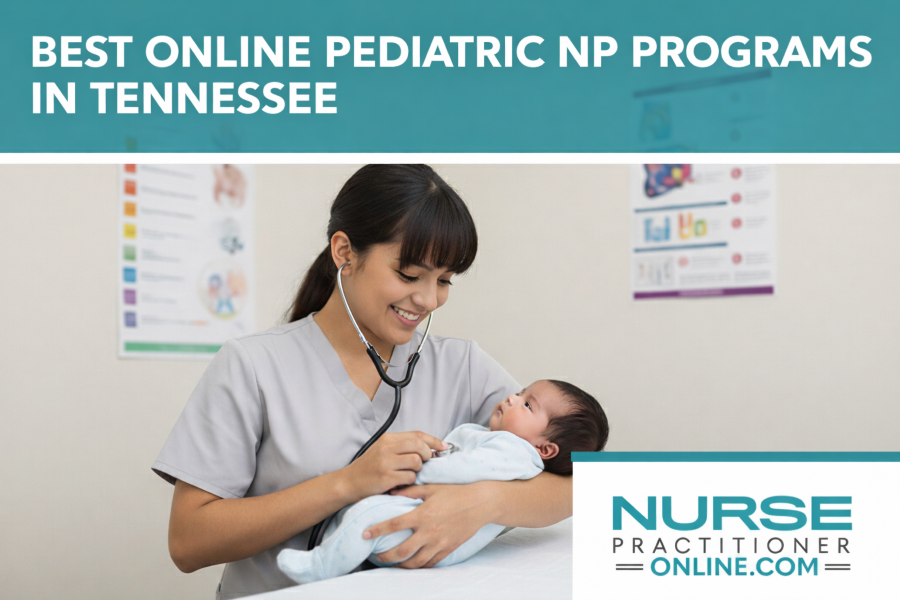
Tennessee’s pediatric healthcare landscape, serving over 1.5 million children from Memphis’s urban neighborhoods to rural mountain communities in East Tennessee, demands Pediatric Nurse Practitioners (PNPs) equipped to address diverse health challenges, including childhood obesity, asthma, developmental delays, and access disparities. Online PNP programs offer Tennessee nurses unprecedented flexibility to specialize in pediatric care while continuing employment at Vanderbilt Children’s Hospital, Le Bonheur Children’s Hospital, East Tennessee Children’s Hospital, or community practices across the Volunteer State.
In this article, you’ll learn:
- Why online PNP programs work particularly well for Tennessee’s geographically diverse nursing workforce
- How to choose between primary care and acute care specializations based on your career vision
- What distinguishes MSN, DNP, and post-master’s certificate pathways
- Where Tennessee PNP students complete required clinical hours across the state
- How Tennessee’s pediatric workforce needs translate into career opportunities and compensation
2026 Best Online Pediatric Nurse Practitioner Programs in Tennessee
The University of Tennessee-Knoxville
Knoxville, TN - Public 4-Year - utk.edu

Graduate Certificate - Pediatric Primary Nurse Practitioner
Online & Campus Based - Visit Website
The University of Tennessee-Knoxville offers a Pediatric Nurse Practitioner graduate certificate program. This program prepares Advanced Practice Registered Nurses for primary pediatric care roles. It features a hybrid learning format with both online and on-campus components. Applicants need a master's degree in nursing, current APRN certification, and recent prerequisite coursework. The program requires 840 clinical hours and includes mandatory on-site sessions. Tuition details are available on the university's graduate fees page. The holistic admissions process prioritizes applicant essays.
- Hybrid program format.
- 840 clinical hours required.
- APRN certification needed.
- Master's degree prerequisite.
- Holistic admissions process.
- Mandatory on-site sessions.
- Primary pediatric care focus.
- Prerequisite courses required.
- Competency-based curriculum.
- State licensure considerations.
Graduate Certificate - Pediatric Acute Care Nurse Practitioner
Online & Campus Based - Visit Website
The University of Tennessee's Pediatric Acute Care Nurse Practitioner Graduate Certificate equips Advanced Practice Registered Nurses (APRNs) with specialized skills to provide comprehensive acute care in pediatric settings. This hybrid program prepares healthcare professionals to deliver high-quality, complex medical interventions for critically ill children. Designed for certified primary care pediatric nurse practitioners, the program offers advanced clinical training with a minimum of 840 clinical practice hours. Prospective students must hold a master's degree from an accredited nursing program and complete specific prerequisite courses within the past five years.
- Hybrid program format
- 840 clinical practice hours
- Advanced practice nursing focus
- Specialized pediatric acute care
- Requires prior pediatric certification
MSN to DNP - Pediatric Primary/Acute Care Dual Nurse Practitioner (Primary/Acute Care)
Online & Campus Based - Visit Website
The University of Tennessee's Pediatric Primary/Acute Care Dual Nurse Practitioner program prepares advanced practice nurses to deliver comprehensive healthcare for children from birth to young adulthood. This hybrid program addresses critical pediatric healthcare provider shortages, offering specialized training across diverse medical settings like emergency departments, intensive care units, and outpatient clinics. Graduates become highly skilled practitioners capable of managing acute, chronic, and complex pediatric conditions with advanced clinical expertise.
- Hybrid online curriculum
- High-fidelity simulation center
- Clinical rotations with mentorship
- Addresses pediatric provider shortage
- Multiple healthcare settings training
- On-campus visits twice semester
- Synchronous online course meetings
MSN to DNP - Primary Care Pediatric Nurse Practitioner
Online & Campus Based - Visit Website
The University of Tennessee's Primary Care Pediatric Nurse Practitioner program equips advanced nursing professionals to deliver comprehensive pediatric healthcare. Designed for those passionate about child health, this hybrid program prepares graduates to address critical provider shortages while offering specialized training in holistic, evidence-based care for children from birth to young adulthood. Students gain advanced clinical skills through high-fidelity simulation, online coursework, and extensive clinical rotations, positioning them for certification and meaningful pediatric healthcare roles.
- Hybrid online curriculum
- 600-840 clinical hours
- High-fidelity simulation training
- Pediatric Nursing Certification eligible
- Multiple healthcare settings
- Advanced practice registered nurse
- Synchronous online course meetings
- Mentored clinical rotations
Tennessee Tech
Cookeville, TN - Public 4-Year - tntech.edu

MSN to DNP - Nursing Practice, Pediatric Nurse Practitioner-Primary Care Concentration, DNP (TTU-ETSU) (Pediatric Nurse Practitioner-Primary Care)
Online & Campus Based - Visit Website
Tennessee Tech's Doctor of Nursing Practice (DNP) program prepares advanced practice nurses specializing in pediatric primary care. This comprehensive professional degree equips healthcare professionals with advanced clinical skills and leadership expertise. Students can choose between BNS-DNP (89-92 credit hours) and MSN-DNP (35 credit hours) pathways, focusing on healthcare needs of specific populations. The program offers intensive training in pediatric nurse practitioner roles, emphasizing evidence-based practice and comprehensive patient care strategies.
- Terminal professional nursing degree
- Pediatric Primary Care Concentration
- Flexible DNP pathway options
- 89-92 credit hour program
- Advanced practice nurse training
Vanderbilt University
Nashville, TN - Private 4-year - vanderbilt.edu

BSN to MSN - Pediatric Nurse Practitioner - Acute Care (Acute Care)
Online & Campus Based - Visit Website
Vanderbilt University's Pediatric Nurse Practitioner - Acute Care program is a groundbreaking specialty designed for experienced RNs seeking advanced pediatric care expertise. The intensive program prepares nurses to provide comprehensive, family-centered care for critically ill children up to age 21. Students complete 560 clinical hours, gaining robust experience in acute care settings. With a curriculum integrating the latest nursing education standards, graduates are equipped to excel in pediatric emergency departments, ICUs, and specialized clinics. The program boasts an impressive certification exam pass rate significantly above the national average, ensuring graduates are well-prepared for high-stakes pediatric acute care roles.
- 4 Full-time Semesters
- Online/Hybrid Learning Format
- 560 Clinical Practice Hours
- For Experienced RNs Only
- High PNCB Exam Pass Rate
- Small Cohort Size
- Clinical Placements Nationwide
BSN to MSN - Pediatric Nurse Practitioner - Primary Care (Primary Care)
Online & Campus Based - Visit Website
Vanderbilt University offers a Master of Science in Nursing (MSN) with a Pediatric Nurse Practitioner - Primary Care specialty. This hybrid program combines online coursework with seven brief in-person sessions. Students complete 630 clinical hours in pediatric primary care settings. The curriculum follows AACN Essentials standards and prepares graduates for CPNP-PC certification. Full-time students finish in four semesters (16 months), with part-time options available. Admissions require a BSN or equivalent, and the program is ranked #2 nationally for MSN-level PNP-PC programs. Costs and specific application dates vary; contact admissions for details.
- Hybrid online/in-person format.
- 630 clinical practice hours.
- Full-time: 4 semesters.
- Part-time plans available.
- Prepares for CPNP-PC certification.
- Low faculty-to-student ratios.
- Clinical placements in preferred areas.
- Focus on pediatric primary care.
- AACN Essentials curriculum.
- Accelerated specialty option.
East Tennessee State University
Johnson City, TN - Public 4-Year - etsu.edu

MSN to DNP - Nursing, DNP (Pediatric Nurse Practitioner-Primary Care)
Online & Campus Based - Visit Website
The Doctor of Nursing Practice (DNP) in Pediatric Nurse Practitioner-Primary Care at East Tennessee State University prepares advanced nursing professionals to deliver high-quality, patient-centered care for children across all ages. This specialized concentration focuses on comprehensive pediatric healthcare, including well-child assessments, acute illness management, and chronic condition treatment. Students develop advanced clinical skills through extensive practicum experiences, preparing them for national certification and leadership roles in diverse healthcare settings. The program combines rigorous academic coursework with practical training, emphasizing evidence-based practice and health promotion strategies.
- 77 total credits for BSN-DNP
- Comprehensive pediatric care focus
- National certification preparation
- Multiple practicum experiences
- Advanced clinical training
- Unencumbered RN licensure required
- Minimum 3.0 GPA mandatory
- Two years nursing experience needed
- Interview part of admission
- Personal statement required
South College
Knoxville, TN - Private 4-year - south.edu
BSN to MSN - Master of Science in Nursing (Pediatric Nurse Practitioner)
Online Learning - Visit Website
The Pediatric Nurse Practitioner-Primary Care Post-Graduate Certificate at South College is an online program for nurses with a graduate degree seeking specialization. It focuses on advanced pediatric care, covering topics like health assessments, pharmacology, and chronic condition management. The curriculum includes 44 credits with clinical practicums and a residency. Admissions require an unencumbered RN license and a master's in nursing, with GPA and professional experience considered. Costs involve tuition and clinical fees, but specific amounts are not detailed. This program prepares graduates for national certification and enhances skills in primary pediatric settings.
- Online program delivery.
- 44 total credits required.
- Post-graduate certificate level.
- Focus on pediatric primary care.
- Includes clinical practicum courses.
- Requires RN license for admission.
- Admission based on GPA review.
- Transfer credit up to 3 courses.
- Program not accepting new students.
- Prepares for national certification exams.
Why Online Learning Works for Tennessee Nurses
Tennessee’s geography creates unique challenges for educational access. Nashville and Memphis anchor opposite ends of the state nearly 200 miles apart, with Knoxville serving East Tennessee another 180 miles from Nashville. Nurses in communities like Jackson, Cookeville, Johnson City, or Clarksville face substantial commutes to reach traditional campus programs.
Online PNP programs eliminate geographic barriers, allowing Tennessee nurses to study from any location, maintain full-time employment at Baptist Memorial Health Care, Ballad Health, or Covenant Health systems, and balance family responsibilities while advancing careers.
Despite online delivery, all programs require substantial in-person clinical training at Tennessee pediatric facilities; typically 500-700 hours for MSN programs.
TIP: Most Tennessee nurses work 12-hour shifts. Online programs accommodate this through asynchronous coursework, where you study during your days off rather than at fixed class times. Clinical rotations require schedule flexibility, often needing 2-3 full days weekly during practicum semesters.
Explore online nurse practitioner schools in Tennessee.
Choosing Your PNP Specialization
Primary Care: The Community-Based Path
What you’ll do: Manage well-child visits, immunizations, common illnesses, chronic conditions like asthma and ADHD, and developmental surveillance in outpatient settings.
Where Tennessee CPNP-PC graduates work: Pediatric practices throughout Nashville, Memphis, Knoxville, and Chattanooga; school-based health centers across Tennessee’s 147 school districts; community health centers; retail clinics at Walmart, Kroger, and CVS locations; and rural health clinics serving Tennessee’s 95 counties.
Acute Care: The Hospital-Based Path
What you’ll do: Manage critically ill, hospitalized children with complex acute conditions requiring immediate medical intervention.
Where Tennessee CPNP-AC graduates work: Monroe Carell Jr. Children’s Hospital at Vanderbilt (Nashville) intensive care units, Le Bonheur Children’s Hospital (Memphis) emergency department, East Tennessee Children’s Hospital (Knoxville) pediatric critical care, Niswonger Children’s Hospital (Johnson City), and Children’s Hospital at Erlanger (Chattanooga).
Program Options: MSN, DNP, and Beyond
Master’s Programs: Your Foundation
Timeline: 18-24 months full-time, 2-3 years part-time
MSN-PNP programs provide entry-level graduate education combining advanced pathophysiology, pharmacology, and health assessment with pediatric-specific content. Graduates are eligible for national PNP certification and Tennessee APRN licensure.
Format options: Fully online with clinical practica arranged near your Tennessee community, campus-based programs in Nashville, Memphis, or Knoxville, or hybrid models blending online coursework with occasional on-campus intensives.
Doctoral Programs: Advanced Credentials
BSN to DNP: 3-4 years, combines all MSN content with doctoral-level education in leadership, policy, and evidence-based practice
Post-Master’s DNP: 1-2 years for PNP-DNP programs, common for those seeking leadership roles at places such as Vanderbilt, St. Jude Children’s Research Hospital, or Tennessee nursing schools
Post-Master’s Certificates: Efficient Specialization
Timeline: 12-18 months | Clinical requirement: 500-600 hours
For practicing NPs in other specialties (family, adult-gerontology), adding a PNP Post-Master’s Certificate can be particularly valuable for Tennessee nurses in rural areas where pediatric-only positions are limited.
TIP: If you’re primarily interested in direct patient care, the MSN is the efficient choice. If you’re an early-career professional with interests in teaching at Tennessee nursing schools, hospital administration, or health policy, the DNP’s additional credentials may justify the extra time and cost.
Clinical Training: Where Theory Meets Practice
Major Children’s Hospitals: Monroe Carell Jr. Children’s Hospital at Vanderbilt (Nashville), Le Bonheur Children’s Hospital (Memphis), East Tennessee Children’s Hospital (Knoxville), Niswonger Children’s Hospital (Johnson City), Children’s Hospital at Erlanger (Chattanooga)
Primary Care Settings: Pediatric practices throughout Tennessee’s metropolitan areas, community health centers including Memphis Health Center, school-based health centers across Tennessee counties, rural health clinics in medically underserved areas
Specialized Populations: St. Jude Children’s Research Hospital (Memphis), Vanderbilt Bill Wilkerson Center for developmental pediatrics, Tennessee Department of Children’s Services
Placement considerations: Nashville, Memphis, and Knoxville offer abundant options. Students in smaller cities may need to travel to regional hubs for certain specialty rotations.
Common Admissions Requirements
| Requirement | Details |
| RN License | Current Tennessee RN license or compact state license |
| Academic Record | BSN with 3.0+ GPA |
| Experience | 1-2 years RN experience recommended |
| Testing | GRE increasingly waived by Tennessee programs |
| References | 2-3 letters from nursing supervisors or faculty |
| Background Check | Required for clinical placements with children |
Investment and Tuition
Program Costs
| Credential | Estimated Total |
| Tennessee public MSN (residents) | $16,000 – $30,000 |
| Out-of-state online MSN | $30,000 – $60,000 |
| Private university MSN | $38,000 – $68,000 |
| Tennessee public DNP (residents) | $30,000 – $50,000 |
| Post-master’s certificate | $18,000 – $40,000 |
TIP: Before enrolling, check your Tennessee employer’s education benefits. Many require you remain employed during and after graduation, sometimes demanding repayment if you leave within 1-2 years.
Tennessee Licensure and Practice Environment
Getting Licensed
- Complete approved program meeting Tennessee Board of Nursing requirements
- Pass national certification (CPNP-PC or CPNP-AC through PNCB)
- Apply for Tennessee APRN license
- Obtain DEA registration for prescriptive authority
Tennessee Scope of Practice
Tennessee requires APRNs to maintain collaborative practice agreements with physicians. However, these agreements are consultative rather than supervisory; physicians provide backup but don’t oversee day-to-day practice. Tennessee PNPs prescribe all medications including Schedule II-V controlled substances and make autonomous clinical decisions within the collaborative framework.
Career Landscape for Tennessee PNPs
Where Tennessee PNPs work: Private pediatric practices, children’s hospitals throughout major cities, urgent care centers, school-based health programs, community health centers, and telehealth platforms expanding pediatric access to rural families.
Compensation by Region:
- Nashville metro: $100,000 – $120,000 annually
- Memphis area: $95,000 – $118,000 annually
- Knoxville region: $95,000 – $115,000 annually
- Chattanooga: $92,000 – $112,000 annually
- Rural Tennessee: $90,000 – $110,000 (often with signing bonuses, loan repayment)
Tennessee’s lower cost of living means PNP salaries provide solid purchasing power. Rural positions frequently include incentives like signing bonuses ($10,000-$20,000) or loan repayment assistance.
Frequently Asked Questions
Q: If I attend an online program based outside Tennessee, will the state accept my degree?
A: Yes, provided the program holds proper accreditation (CCNE or ACEN) and prepares you for national PNP certification. Always verify accreditation before enrolling.
Q: Do I need pediatric nursing experience before applying?
A: Not required, though pediatric experience strengthens applications. Tennessee programs accept nurses from adult units, emergency departments, and other specialties. Strong academics can offset lack of pediatric background.
Q: How difficult is finding clinical preceptors in Tennessee?
A: Difficulty varies by location. Nashville, Memphis, and Knoxville have abundant options. Smaller Tennessee cities and rural areas present more challenges. Starting your preceptor search immediately upon acceptance is highly beneficial.

- Best Online Pediatric Nurse Practitioner Programs in Tennessee - February 20, 2026
- Best Online Psychiatric Mental Health Nurse Practitioner Programs in Indiana - February 10, 2026
- The 2025 DNP Deadline Has Passed: Where Do We Stand Now? - February 6, 2026