
How to Find NP Clinical Preceptors: A Step-by-Step Guide for Students
Page Sections
Use the drop down menu below to jump to a specific section.
Securing clinical preceptors is one of the most important and often stressful parts of becoming a nurse practitioner (NP). While some programs help arrange placements, many students in MSN, DNP, and post-master's NP certificate programs are expected to find their own preceptors.
The good news? With the right strategy, you can successfully secure high-quality clinical sites that align with your specialty and career goals.
This article will cover:
- What NP clinical preceptors do and why they matter
- Which degree pathways require you to find your own placements (MSN, DNP, certificate)
- A step-by-step process to secure preceptors
- Outreach strategies and sample messaging tips
- Common mistakes to avoid
What Is an NP Clinical Preceptor?
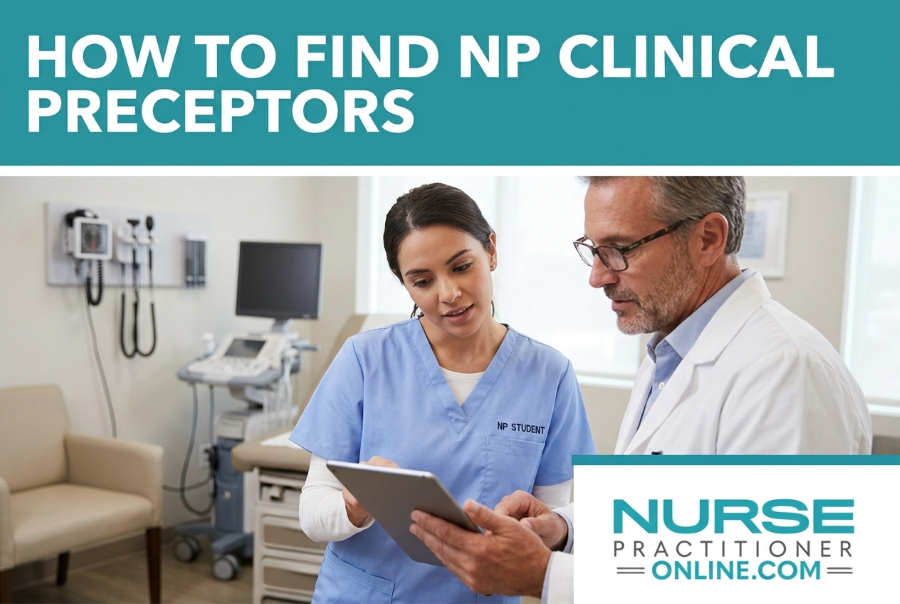
A clinical preceptor is a licensed healthcare provider, often a nurse practitioner, physician, or physician assistant, who supervises your hands-on training during your program.
Preceptors help you:
- Apply classroom knowledge in real patient settings
- Build diagnostic and treatment skills
- Gain specialty-specific experience (e.g., family, psychiatric, pediatric)
- Meet required clinical hour requirements (typically 500–1,000+ hours)
Do All NP Programs Require You to Find Your Own Preceptor?
Not all programs operate the same way. Understanding expectations early can save you time and frustration.
Clinical Placement Expectations by Degree Type
| Degree Path | Typical Requirement | Notes |
| MSN NP Programs | Often student-assisted | Some schools help, but many expect students to lead the search |
| DNP Programs | Mixed (school + student) | Higher clinical hour requirements; may require multiple placements |
| Post-Master's NP Certificates | Usually student-driven | Especially true for online programs |
Tip: When researching programs, look for phrases like "clinical placement support" vs. "student responsible for securing preceptors."
Step-by-Step Guide to Finding NP Clinical Preceptors
Step 1: Start Early (Very Early)
Begin your search at least 4–6 months before your clinical rotation, and even earlier in competitive areas.
Why this matters:
- Popular preceptors book up quickly
- Credentialing and paperwork can take weeks
- You may need backup options
Step 2: Leverage Your Existing Network
Start with connections you already have.
Potential leads include:
- Current or former supervisors
- Physicians or NPs at your workplace
- Nursing school faculty
- Alumni from your program
Even a weak connection can lead to a strong referral.
Step 3: Target the Right Providers
Focus on preceptors who align with your specialty track.
Common NP Specialties and Ideal Preceptors
| NP Specialty | Ideal Preceptor Type | Common Settings |
| Family NP (FNP) | NP, MD, DO | Primary care clinics, family practices |
| Psychiatric NP (PMHNP) | Psychiatrist, PMHNP | Behavioral health clinics, hospitals |
| Pediatric NP (PNP) | Pediatrician, PNP | Pediatric offices, children's hospitals |
| Adult-Gerontology NP (AGNP) | NP, MD | Internal medicine, specialty clinics |
Step 4: Build a Strong Outreach Strategy
Cold outreach is often necessary, but it needs to be done professionally.
Best outreach methods:
- Email (most common)
- Phone calls (follow-up)
- In-person visits (when appropriate)
Step 5: Craft a Compelling Introduction
Your goal is to make it easy for a provider to say "yes."
Include:
- Who you are and your program (MSN, DNP, or certificate)
- Your specialty track
- Required clinical hours and timeline
- Why you're interested in their practice
Sample Outreach Structure
- Brief introduction (name, RN background)
- Program and degree type (e.g., MSN-FNP student)
- Clinical requirements (hours, dates)
- Why you chose them specifically
- Request for a brief conversation
Keep emails concise; providers are busy.
Step 6: Prepare Your Materials
Have everything ready before reaching out.
Common requirements:
- Resume or CV
- Proof of RN licensure
- Immunization records
- Background check
- Liability insurance
Being prepared shows professionalism and speeds up placement.
Step 7: Follow Up (Professionally)
If you don't hear back, follow up after 7–10 days.
Follow-up tips:
- Be polite and concise
- Reiterate your interest
- Thank them for their time
Avoid multiple aggressive follow-ups; this can backfire.
Step 8: Use Multiple Channels
Don't rely on just one approach.
Expand your search with:
- Professional organizations (e.g., NP associations)
- LinkedIn networking
- Clinical placement services (some are paid)
- Local healthcare systems
Common Mistakes to Avoid
- Waiting too long to start your search
- Sending generic, copy-paste emails
- Not researching the provider beforehand
- Failing to meet program or site requirements
- Relying on only one potential preceptor
Can Schools Help with Clinical Placements?
Some programs offer assistance, but rarely full guarantees.
Types of Support You Might See:
- Placement coordination teams
- Preceptor databases
- Affiliation agreements with healthcare systems
Online MSN and DNP programs are more likely to require student involvement, making this guide especially important.
Things to Remember
- Finding NP clinical preceptors is a critical part of MSN, DNP, and certificate programs
- Starting early and networking strategically makes a major difference
- Tailored outreach and professionalism improve your chances
- Having backup options is essential in competitive regions
FAQs
Q: How hard is it to find an NP clinical preceptor?
A: It can be challenging, especially in competitive areas or specialties like PMHNP. Starting early and using multiple strategies significantly improves your chances.
Q: Do online NP programs find preceptors for you?
A: Some offer support, but many require students to secure their own placements. Always verify this before enrolling.
Q: Can a physician serve as an NP preceptor?
A: Yes. Many programs allow MDs or DOs to serve as preceptors, especially in primary care and specialty settings.
Q: Can you pay a preceptor?
A: Some preceptors request compensation, though this varies by program and region. Always check your school's policy before agreeing to payment.
Q: What happens if I can't find a preceptor?
A: You may need to delay your clinical rotation, which can extend your graduation timeline. This is why early planning is essential.
- How to Find NP Clinical Preceptors: A Step-by-Step Guide for Students - March 27, 2026
- Best Online Adult-Gerontology Nurse Practitioner Programs in Florida - March 25, 2026
- Best Online Pediatric Nurse Practitioner Programs in Virginia - March 13, 2026